Medical Office Cleaning Guide for Compliance and Safety
- support760146
- Feb 15
- 7 min read
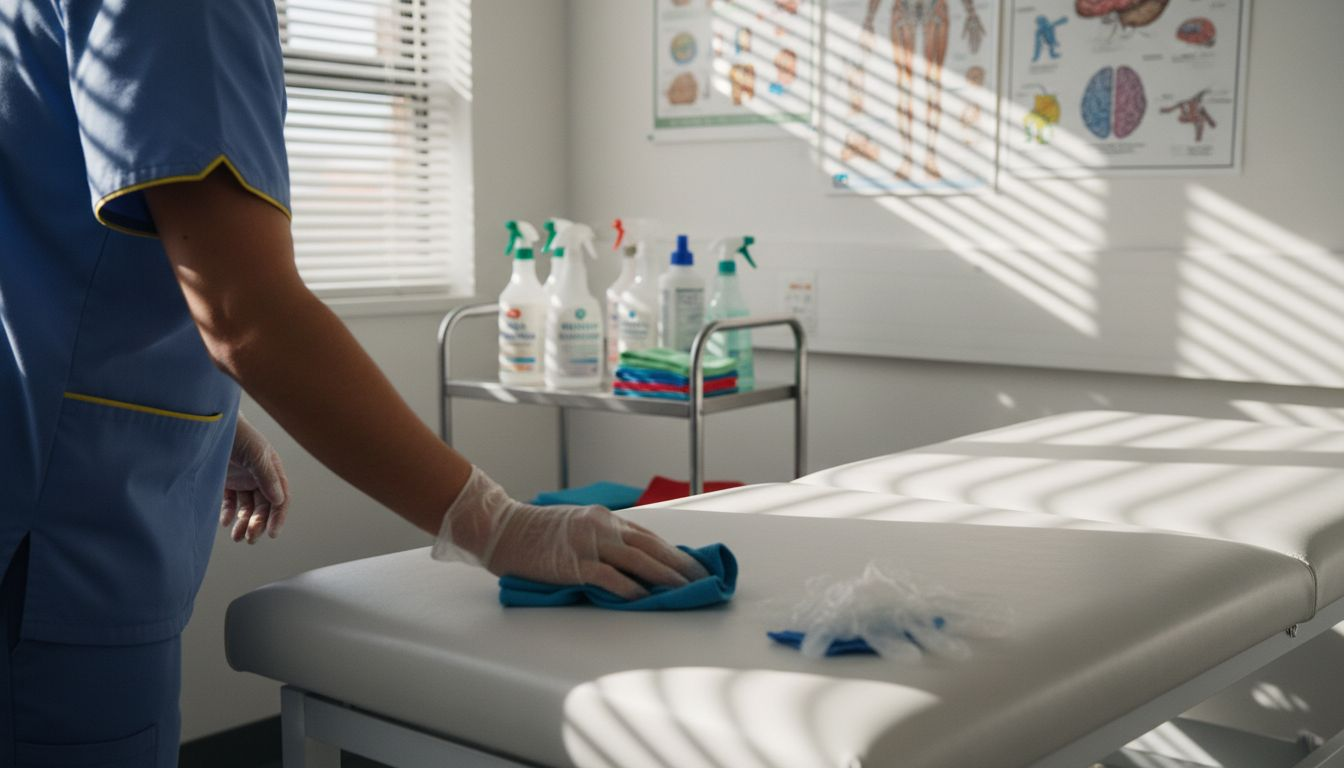
Every medical office manager in St. Augustine and Ponte Vedra knows how challenging it can be to keep every corner of the facility both spotless and compliant with regulations. Meeting strict health standards protects patients and staff from infection risks and supports your reputation as a dependable healthcare provider. This guide brings practical, research-backed cleaning protocols that cover everything from preparing your office for safe cleaning to verifying compliance and maintaining thorough disinfection of high-touch surfaces.
Table of Contents
Quick Summary
Key Point | Explanation |
1. Conduct Risk Assessments | Identify high-touch surfaces and contamination zones to tailor cleaning strategies for safety and compliance. |
2. Use Appropriate Disinfectants | Select EPA-registered disinfectants and follow their contact time specifications for effective pathogen elimination. |
3. Sanitize Medical Equipment Regularly | Implement comprehensive sterilization protocols for all medical equipment to prevent infections in healthcare settings. |
4. Segregate Medical Waste Properly | Categorize and dispose of different types of waste using color-coded containers to enhance safety and compliance. |
5. Verify Cleaning Standards Consistently | Regularly inspect cleaning practices and maintain documentation to ensure compliance with healthcare standards. |
Step 1: Prepare Medical Office for Safe Cleaning
Preparing your medical office for thorough and safe cleaning requires strategic planning and precise protocols. This step focuses on establishing a comprehensive cleaning preparation framework that meets healthcare cleaning standards and protects both staff and patients.
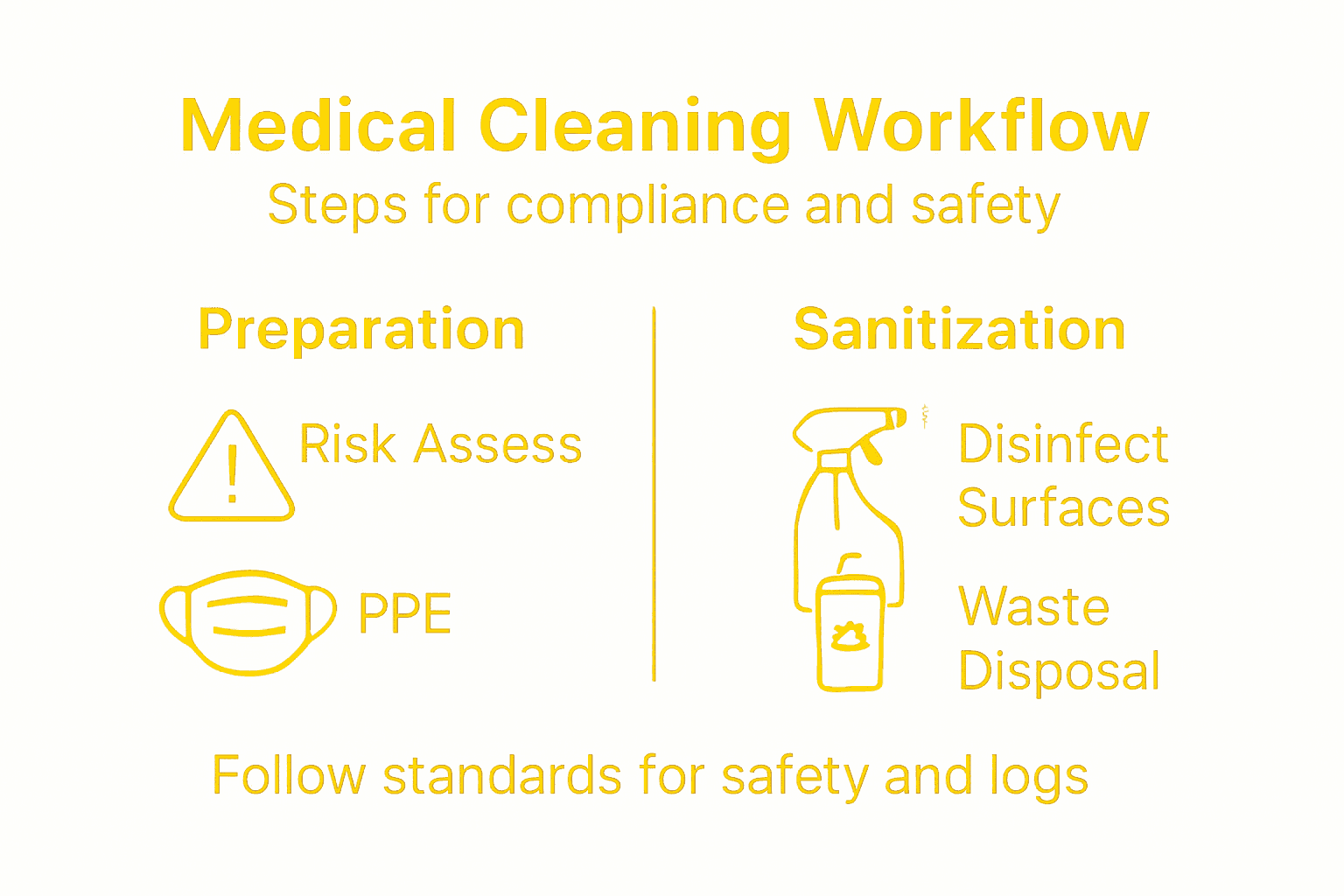
Start by conducting a comprehensive risk assessment of your medical office. This involves identifying high-touch surfaces, potential contamination zones, and specific cleaning requirements for different areas. Key preparation steps include:
Inventory all cleaning equipment and supplies
Assess different area risk levels (waiting rooms, examination rooms, laboratory spaces)
Select EPA-registered, low-hazard cleaning products
Prepare appropriate personal protective equipment (PPE)
Establish clear cleaning schedules and responsibilities
Each medical office zone requires unique cleaning considerations. Examination rooms demand higher-intensity disinfection compared to administrative areas. Healthcare managers should develop detailed protocols specifying exact cleaning methods, product concentrations, and frequency for each space.
Here’s a summary of cleaning protocols by medical office zone:
Area | Cleaning Frequency | Special Considerations |
Examination Rooms | After each patient visit | Use hospital-grade disinfectants |
Waiting Rooms | Multiple times per day | Focus on seating and play areas |
Administrative | Daily | Disinfect electronics and shared desks |
Laboratory Spaces | After each procedure | Handle spills with extra precautions |
Bathrooms | At least twice per shift | Pay attention to handles and fixtures |
Effective medical office cleaning preparation minimizes cross-contamination risks and ensures a safe environment for patients and healthcare workers.
Personal protective equipment is critical during the preparation phase. Staff must have access to gloves, masks, protective eyewear, and disposable gowns. Proper ventilation and understanding chemical safety are equally important when setting up cleaning procedures.
Pro tip: Always color-code cleaning equipment and establish strict protocols for tool management to prevent cross-contamination between different office areas.
Step 2: Disinfect High-Touch Surfaces Thoroughly
Disinfecting high-touch surfaces in a medical office requires a systematic and thorough approach to eliminate potential pathogen transmission. This step is crucial for maintaining a safe healthcare environment and protecting both patients and staff from infectious risks.
Begin by identifying and targeting critical high-touch surfaces that frequently encounter human contact. These typically include:
Door handles and push plates
Light switches
Countertops and reception desks
Computer keyboards and mice
Telephone handsets
Examination room equipment
Waiting room chairs and armrests
Bathroom fixtures
Prepare your disinfection strategy by selecting EPA-registered disinfectants specifically designed for healthcare environments. Ensure you have the appropriate personal protective equipment and follow manufacturer instructions carefully. Each surface requires specific contact time to effectively eliminate pathogens.
Proper disinfection is not just about wiping surfaces, but ensuring complete pathogen elimination through correct product application and contact time.
Systematic disinfection techniques are essential. Start from the cleanest areas and progress to more contaminated zones, using different cleaning cloths or disposable wipes for each area. This prevents cross-contamination and ensures thorough coverage.
Pro tip: Always use color-coded microfiber cloths for different areas to prevent inadvertent cross-contamination and maintain strict infection control standards.
Step 3: Sanitize Medical Equipment and Waiting Areas
Sanitizing medical equipment and waiting areas is a critical process that requires meticulous attention to detail and specialized techniques. This step ensures a safe, hygienic environment for patients and healthcare professionals by eliminating potential sources of infection and cross-contamination.
Begin by implementing comprehensive sterilization protocols for all medical equipment. Focus on critical areas that require thorough sanitization:
Examination tables and chairs
Diagnostic equipment
Surgical instruments
Patient monitoring devices
Shared computer workstations
Treatment room surfaces
Select EPA-approved disinfectants specifically designed for medical environments. Different equipment types may require unique sanitization methods, such as steam sterilization, chemical disinfection, or specialized cleaning techniques.
Effective sanitization goes beyond surface cleaning - it’s about creating a comprehensive barrier against potential healthcare-associated infections.
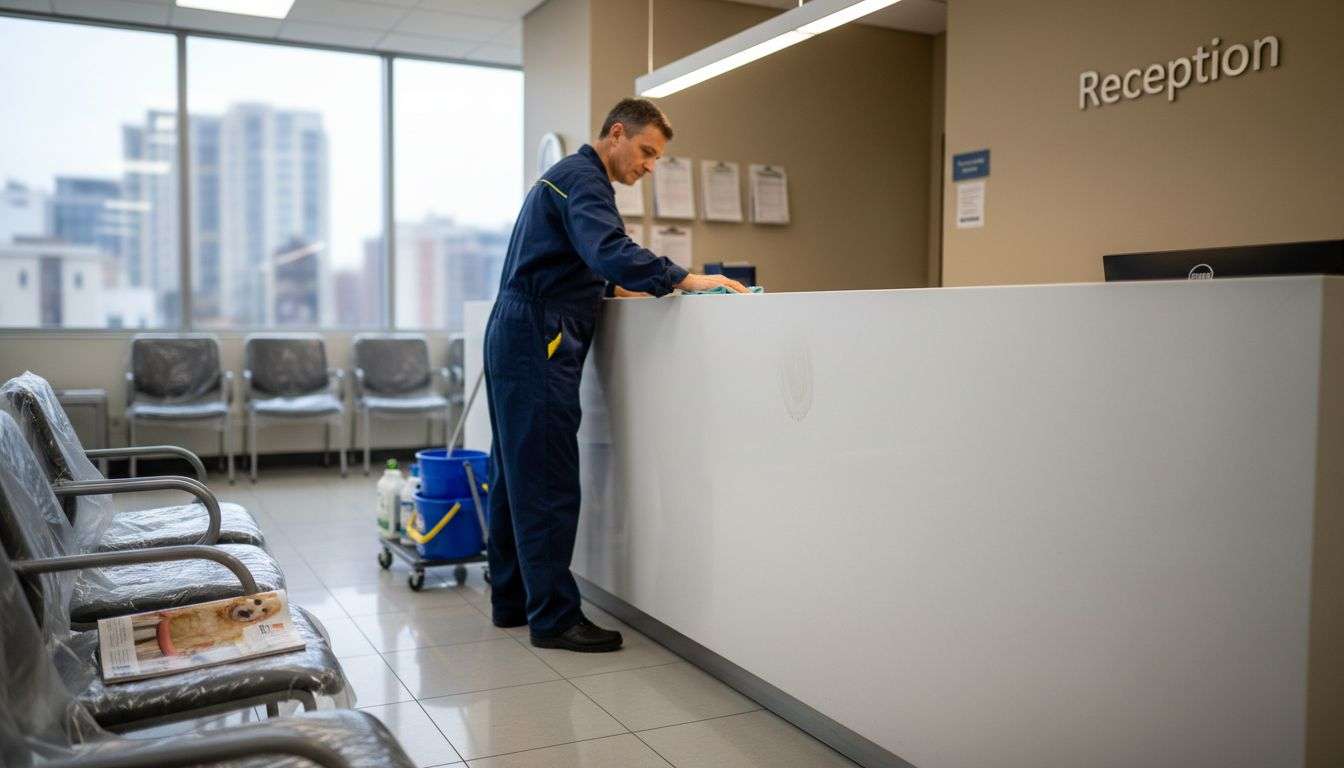
Waiting area sanitization demands equal attention. Prioritize high-touch surfaces like reception counters, chair arms, magazines, and payment terminals. Implement a regular cleaning schedule that involves thorough disinfection of all shared spaces.
Pro tip: Use disposable protective covers on shared equipment and rotate them frequently to provide an additional layer of protection against cross-contamination.
Step 4: Dispose of Waste and Contaminants Properly
Properly disposing of medical waste and contaminants is a critical responsibility that protects healthcare workers, patients, and the broader community from potential health risks. This step requires precise protocols and a systematic approach to managing different types of medical waste safely and legally.
Begin by implementing comprehensive waste management protocols that categorize and segregate waste types. Different medical waste requires specific disposal methods:
Sharps (needles, scalpels, glass)
Infectious waste
Pathological waste
Chemical waste
Pharmaceutical waste
Radioactive materials
Use color-coded, leak-proof containers designed for specific waste types. Each container should be properly labeled with contents, date, and hazard information. Wear appropriate personal protective equipment like thick gloves, gowns, and face protection during waste handling.
Compare the different types of medical waste handling:
Waste Type | Color Code | Essential Handling Requirement |
Sharps | Red | Use puncture-resistant containers |
Infectious Waste | Yellow | Leak-proof, sealable bags required |
Chemical Waste | Brown | Store in corrosion-resistant containers |
Pharmaceutical | Blue | Dispose separate from general waste |
Radioactive | Purple | Use shielded, labeled containers |
Proper medical waste disposal is not just a regulatory requirement - it’s a critical component of patient and worker safety.
Disposal documentation is equally important. Maintain detailed logs tracking waste type, volume, disposal method, and date of disposal. These records help ensure compliance with local and federal regulations and provide a clear audit trail for potential inspections.
Pro tip: Conduct regular staff training on waste disposal protocols to ensure everyone understands the specific handling requirements for different waste categories.
Step 5: Verify Cleaning Standards and Compliance
Verifying cleaning standards and compliance is the critical final step in ensuring your medical office maintains the highest levels of hygiene and safety. This process involves systematic evaluation of cleaning protocols to confirm that every area meets stringent healthcare environmental standards.
Begin by implementing comprehensive infection prevention practices that systematically assess cleaning effectiveness. Key verification methods include:
Conduct regular visual inspections
Use ATP testing for surface contamination
Review cleaning logs and documentation
Perform random spot checks
Schedule third-party compliance audits
Interview environmental services staff about protocols
Develop a structured audit process that examines both cleaning techniques and documentation. This means checking not just the cleanliness of surfaces, but verifying that proper procedures were followed, chemicals were used correctly, and all safety protocols were maintained.
Effective compliance verification is about creating a culture of accountability and continuous improvement in medical office cleaning standards.
Documentation and tracking play a crucial role in compliance verification. Maintain detailed records of cleaning schedules, staff training, equipment maintenance, and inspection results. These records provide a clear trail of your commitment to maintaining the highest hygiene standards.
Pro tip: Create a standardized checklist with clear, measurable criteria to make compliance verification consistent and objective.
Elevate Your Medical Office Cleaning to Meet Compliance and Safety Standards
Maintaining a spotless and compliant medical office is essential for protecting both patients and staff from health risks. From disinfecting high-touch surfaces to proper waste disposal and verifying cleaning standards, every detail matters in preventing infections and ensuring a safe healthcare environment. However, these tasks can be complex and time-consuming without professional support.
Take the pressure off your team by trusting professional cleaning services that understand these critical cleaning protocols. At My Lemon Maids, we specialize in commercial cleaning that includes deep cleaning solutions designed for sensitive environments like medical offices. Our trained staff follow rigorous procedures using EPA-registered products and pay close attention to sanitizing high-risk areas and equipment. Don’t wait until compliance issues arise. Visit My Lemon Maids now to schedule a service that ensures your medical office meets the highest standards for safety and hygiene. Experience peace of mind today with tailored office cleaning you can rely on.
Frequently Asked Questions
What are the key steps to prepare a medical office for safe cleaning?
To prepare a medical office for safe cleaning, conduct a risk assessment to identify high-touch surfaces and contamination zones. Inventory cleaning supplies, select appropriate cleaning products, and establish clear cleaning schedules and responsibilities.
How often should different areas of a medical office be cleaned?
Cleaning frequency varies by area: examination rooms should be cleaned after each patient visit, while waiting rooms require cleaning multiple times per day. Establish a daily cleaning protocol for administrative areas and ensure bathrooms are cleaned at least twice per shift.
What personal protective equipment should staff use during medical office cleaning?
Staff should use gloves, masks, protective eyewear, and disposable gowns when cleaning. Ensure everyone has access to this personal protective equipment and promote proper chemical safety practices during cleaning procedures.
How can we verify compliance with cleaning standards in a medical office?
Verifying compliance involves regular visual inspections, ATP testing for surface contamination, and reviewing cleaning logs. Conduct random spot checks and maintain detailed documentation to track cleaning effectiveness and ensure compliance with healthcare standards.
What should be done with medical waste to ensure safe disposal?
Medical waste should be categorized and segregated according to type, using color-coded, leak-proof containers for disposal. Ensure staff wear appropriate personal protective equipment while handling waste and maintain detailed logs of waste disposal to comply with regulations.
Recommended
Comments