Step by Step Office Cleaning for a Spotless Workspace
- jeffwashausen
- Jan 19
- 7 min read

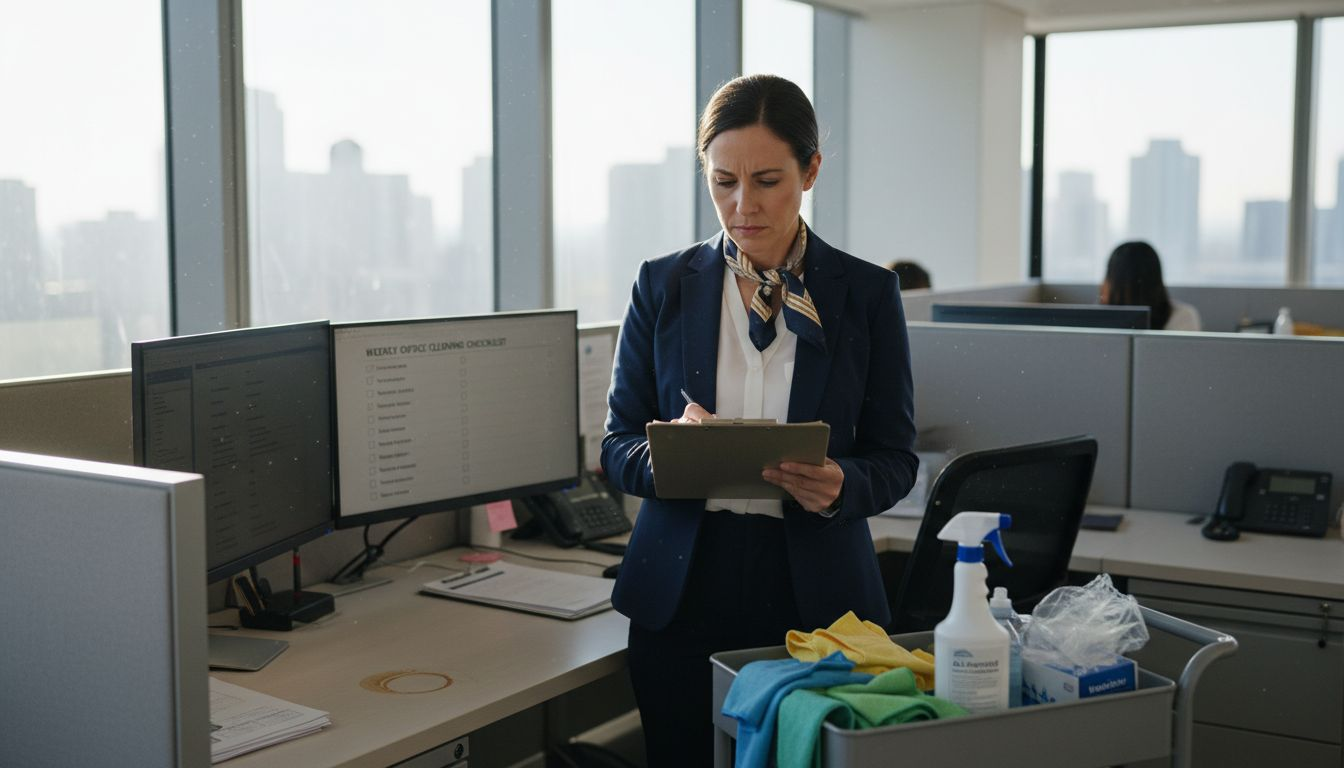
Most American office spaces lose productivity every year because simple cleaning oversights lead to more sick days and workplace disruptions. For Office Managers in St. Augustine, Ponte Vedra, and Nocatee, balancing thorough cleanliness with budget limits can feel relentless. This guide breaks down fast, cost-effective strategies to assess, organize, sanitize, and maintain your workspace using step-by-step solutions designed to keep your team healthy and your office running smoothly.
Table of Contents
Quick Summary
Main Insight | Explanation |
1. Assess cleaning needs effectively | Identify high-traffic areas and surfaces to prioritize in your cleaning plan for maximum efficiency. |
2. Maintain organized workspaces | Systematically declutter to enhance workspace aesthetics and minimize allergens, boosting employee productivity. |
3. Sanitize high-touch surfaces consistently | Regularly clean doorknobs, keyboards, and shared devices using EPA-approved disinfectants to reduce germ transmission. |
4. Thoroughly clean floors | Vacuum and mop all flooring types to eliminate dust and contaminants, ensuring a pristine office environment. |
5. Establish routine restocking procedures | Keep essential cleaning supplies fully stocked with a digital inventory system to maintain a professional workspace. |
Step 1: Assess cleaning needs and gather supplies
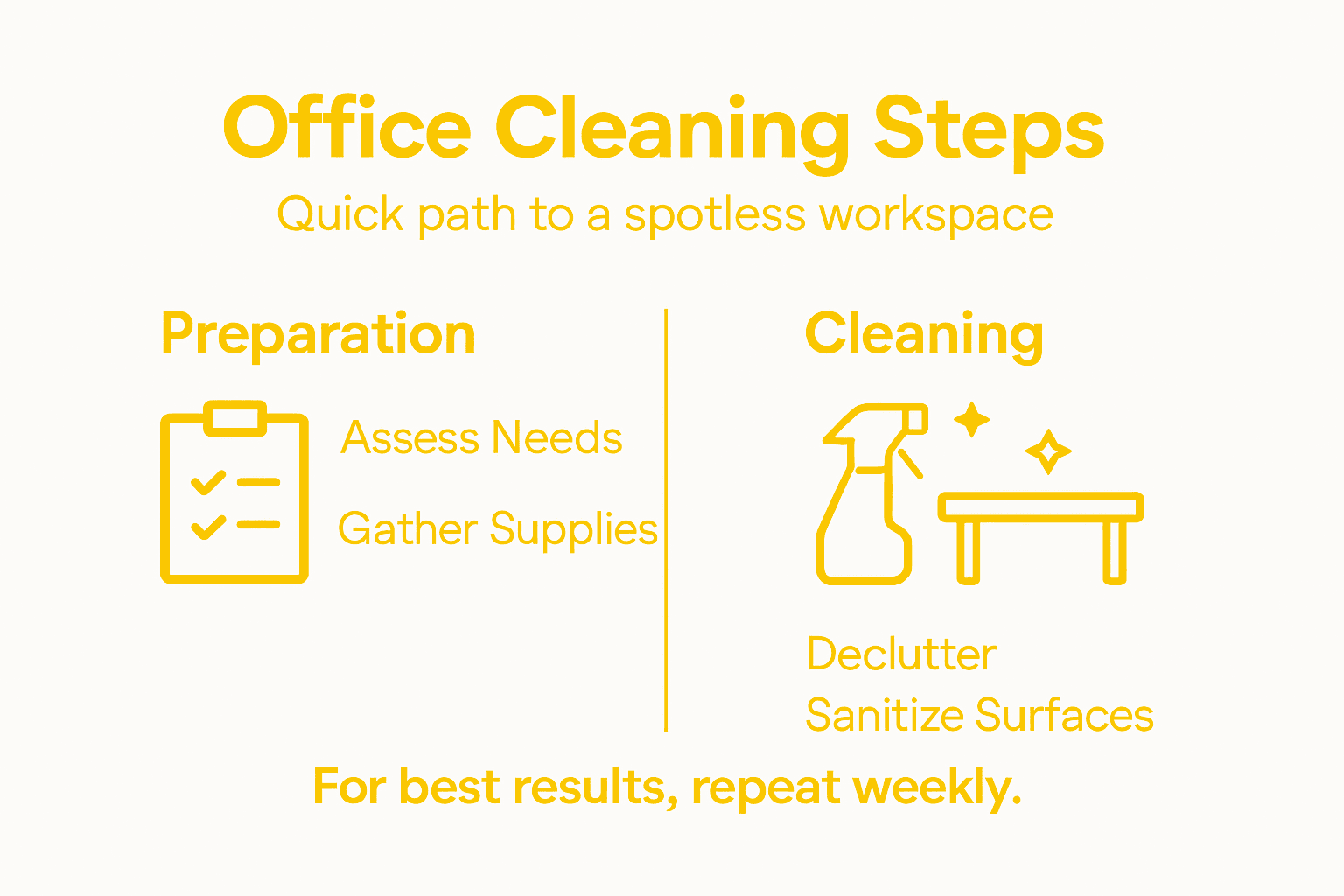
Preparing your office for a thorough cleaning starts with strategic assessment and smart supply selection. Understanding your workspace’s unique cleaning requirements will help you create an efficient and effective cleaning plan.
Begin by carefully examining your office environment and identifying high-traffic areas and surfaces that accumulate the most dirt and germs. Strategic cleaning prioritization involves mapping out spaces like reception areas, conference rooms, workstations, and shared equipment zones. Take note of surface types including desks, keyboards, phones, doorknobs, and common touchpoints that require special attention.
Next, gather your cleaning supplies strategically. Your essential toolkit should include microfiber cloths, all-purpose cleaners, disinfectant wipes, trash bags, gloves, and disposable cleaning towels. Select EPA-approved disinfectants that effectively eliminate germs while being safe for various office surfaces. Pro tip for office managers: organize cleaning supplies in a portable caddy to streamline your cleaning process and ensure you have everything within reach.
Here’s a quick summary comparing the cleaning focus for each main office area:
Area | Main Cleaning Focus | Impact on Workplace |
Reception | Surface & touchpoint sanitization | Improves first impression |
Workstations | Decluttering & electronics cleaning | Boosts productivity |
Conference Rooms | Touchpoint & tabletop sanitization | Reduces illness spread |
Shared Equipment | Device sanitation | Prevents cross-contamination |
Floors | Vacuuming & mopping | Enhances air quality |
Pro tip: Invest in color coded cleaning cloths to prevent cross contamination between different office zones and surfaces.
Step 2: Organize and declutter workspaces
A clean office begins with strategic organization and systematic decluttering. By creating an orderly environment, you will not only improve workspace aesthetics but also enhance employee productivity and overall workplace health.
Start by systematically clearing surfaces and removing unnecessary items. Workspace health benefits extend beyond appearance by reducing dust accumulation and minimizing potential allergy triggers. Focus on removing stacks of outdated papers, unused equipment, and random items that have accumulated over time. Create designated storage areas for frequently used items and implement a file management system that keeps important documents accessible yet neatly contained.
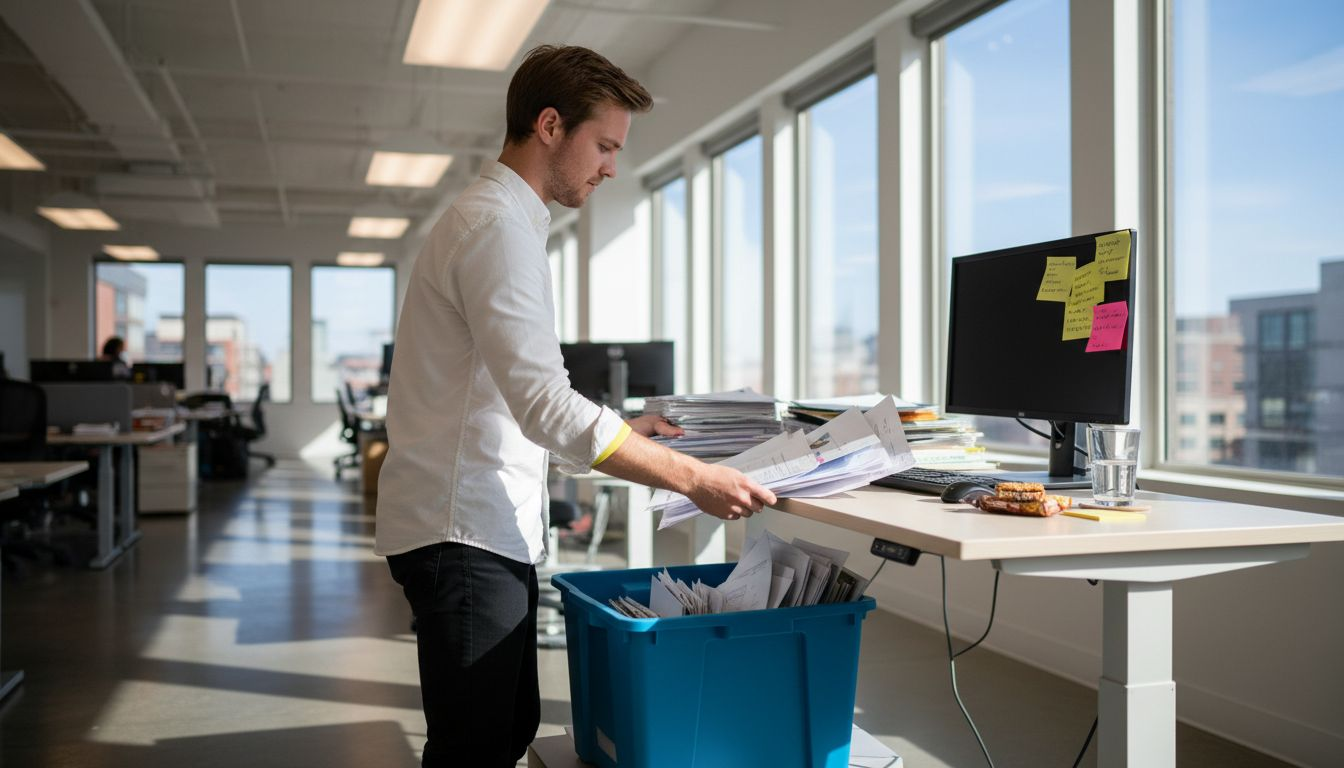
Encourage employees to maintain personal workspace organization by establishing clear guidelines. Each workstation should have minimal desktop clutter with organized storage solutions like drawer organizers, document trays, and cable management systems. Pay special attention to shared spaces like conference rooms and reception areas, ensuring these zones remain professional and efficient.
Pro tip: Implement a monthly desk cleaning policy where employees spend 30 minutes organizing their workspace and disposing of unnecessary materials.
Step 3: Sanitize high touch surfaces and devices
Ensuring a thoroughly sanitized office environment requires systematic attention to high traffic surfaces and shared devices. Your goal is to eliminate germs and reduce potential transmission of infectious agents across the workplace.
Comprehensive sanitization protocols focus on identifying and methodically cleaning frequently touched surfaces. Begin with critical touchpoints like doorknobs, light switches, keyboards, phones, conference room tables, copy machines, and shared computer equipment. Use EPA approved disinfectant wipes or sprays specifically designed to kill bacteria and viruses. Work systematically from one end of the office to the other, ensuring no surface is overlooked. Pay special attention to shared technology like remote controls, touchscreens, and communal tablets.
When sanitizing electronic devices, use microfiber cloths slightly dampened with disinfectant solution to prevent liquid damage. Always unplug electronic equipment before cleaning and allow surfaces to air dry completely. Wear disposable gloves during the cleaning process and dispose of them immediately after use to prevent cross contamination.
Pro tip: Create a color coded cleaning system where different cloths and cleaning tools are designated for specific office zones to prevent potential germ spread.
Step 4: Vacuum and mop all floors thoroughly
Creating a pristine office environment requires meticulous floor cleaning that goes beyond simple surface appearance. Your goal is to eliminate dirt, dust, and potential contaminants from every square inch of flooring.
Comprehensive floor cleaning techniques start with thorough vacuuming to remove loose debris before mopping. Begin by selecting the appropriate vacuum for your floor type whether carpeted or hard surface. For carpeted areas, use a commercial grade vacuum with strong suction and adjustable height settings. Move systematically across the floor in overlapping passes, paying extra attention to high traffic zones like entryways, hallways, and areas near desks.
After vacuuming, prepare to mop by selecting a cleaning solution appropriate for your specific flooring material. Hardwood floors require different treatment compared to vinyl or tile surfaces. Use microfiber mops for maximum cleaning efficiency and minimal moisture. Work in sections starting from the furthest point of the room and moving toward the exit to prevent walking on freshly cleaned areas. Rinse your mop frequently and change cleaning water to avoid redistributing dirt.
Pro tip: Invest in a professional grade wet vacuum system that can simultaneously extract dirt and apply cleaning solution for maximum efficiency and minimal floor drying time.
Step 5: Inspect results and restock essentials
The final phase of office cleaning involves carefully reviewing your work and ensuring all necessary supplies are fully stocked and ready for future use. This critical step transforms a good cleaning job into an exceptional one by maintaining ongoing workplace readiness.
Office management supply protocols require systematic inspection of all cleaned areas. Walk through each workspace methodically, checking for missed spots, ensuring surfaces are thoroughly cleaned, and verifying that no cleaning residue remains. Pay close attention to corners, baseboards, and hard to reach areas that are often overlooked. Examine floors, surfaces, and equipment to confirm they meet your established cleaning standards.
Immediate restocking of cleaning and office essentials is crucial for maintaining a professional environment. Check and replenish supplies like paper towels, hand soap, disinfectant wipes, trash can liners, and sanitizing solutions. Create an inventory checklist to track supply levels and establish a consistent restocking routine. Organize cleaning supplies in a designated storage area, keeping them easily accessible for future use and ensuring nothing runs out unexpectedly.
The following table highlights the benefits of maintaining a consistent restocking routine for cleaning and office supplies:
Benefit | Description | Result |
Reduced disruptions | Supplies always available | Smoother daily workflow |
Enhanced workplace hygiene | Immediate access to cleaning tools | Fewer sick days |
Cost efficiency | Bulk restocking savings | Lower annual expenses |
Employee satisfaction | Clean, well-stocked workspace | Improved morale |
Pro tip: Create a digital inventory tracking system that alerts you when supply levels drop below 25 percent to prevent unexpected shortages.
Elevate Your Office Cleanliness with Expert Help
Keeping your workspace spotless involves more than just routine tidying. From sanitizing high-touch surfaces to organizing cluttered desks and ensuring thorough floor care every step is essential to create a healthy and productive office environment. The detailed cleaning strategies shared in this article highlight common challenges like preventing cross-contamination and maintaining supply readiness that many office managers face daily.
Deep Cleaning and Office Cleaning Services at My Lemon Maids are designed to take the guesswork out of these critical tasks. Our professional team uses EPA-approved disinfectants and color-coded cleaning tools to ensure each area receives the specialized attention it needs.

Don’t let dirt and disorganization hold back your team’s productivity or risk workplace health. Experience the confidence that comes with a professionally cleaned office by visiting My Lemon Maids today. Schedule your cleaning now and keep your workspace consistently shining and safe.
Frequently Asked Questions
How do I assess my office cleaning needs?
Start by examining your workspace for high-traffic areas and surfaces that collect dirt and germs. Make a list of the spaces that need special attention, such as reception areas and workstations, to develop a targeted cleaning plan.
What supplies do I need for office cleaning?
Gather essential supplies including microfiber cloths, all-purpose cleaners, disinfectant wipes, trash bags, gloves, and disposable cleaning towels. Ensure you include EPA-approved disinfectants that are safe for various surfaces to promote effective cleaning.
How can I declutter and organize workspaces effectively?
Begin by clearing surfaces of unnecessary items and creating designated storage areas for frequently used supplies. Implement a file management system to keep documents accessible yet organized, encouraging a tidier workspace.
What surfaces should I focus on sanitizing in my office?
Pay special attention to high-touch surfaces such as doorknobs, keyboards, phones, and conference room tables during sanitization. Use EPA-approved disinfectants and follow a systematic approach to ensure all critical areas are thoroughly cleaned.
How should I clean and maintain office floors?
Start by vacuuming to remove loose debris, particularly in high-traffic areas, before mopping with the appropriate cleaning solution. Use well-maintained equipment to ensure thorough cleaning and prevent dirt from being redistributed.
What should I do after I finish cleaning the office?
Inspect all cleaned areas to ensure they meet your standards and restock necessary supplies. Create an inventory checklist to help track your cleaning materials, making sure everything is available for future use.
Recommended
Comments