
Move In/Move Out Checklist: Secure Your Deposit in 2026
- Glenn Brosnick
- Apr 21
- 8 min read
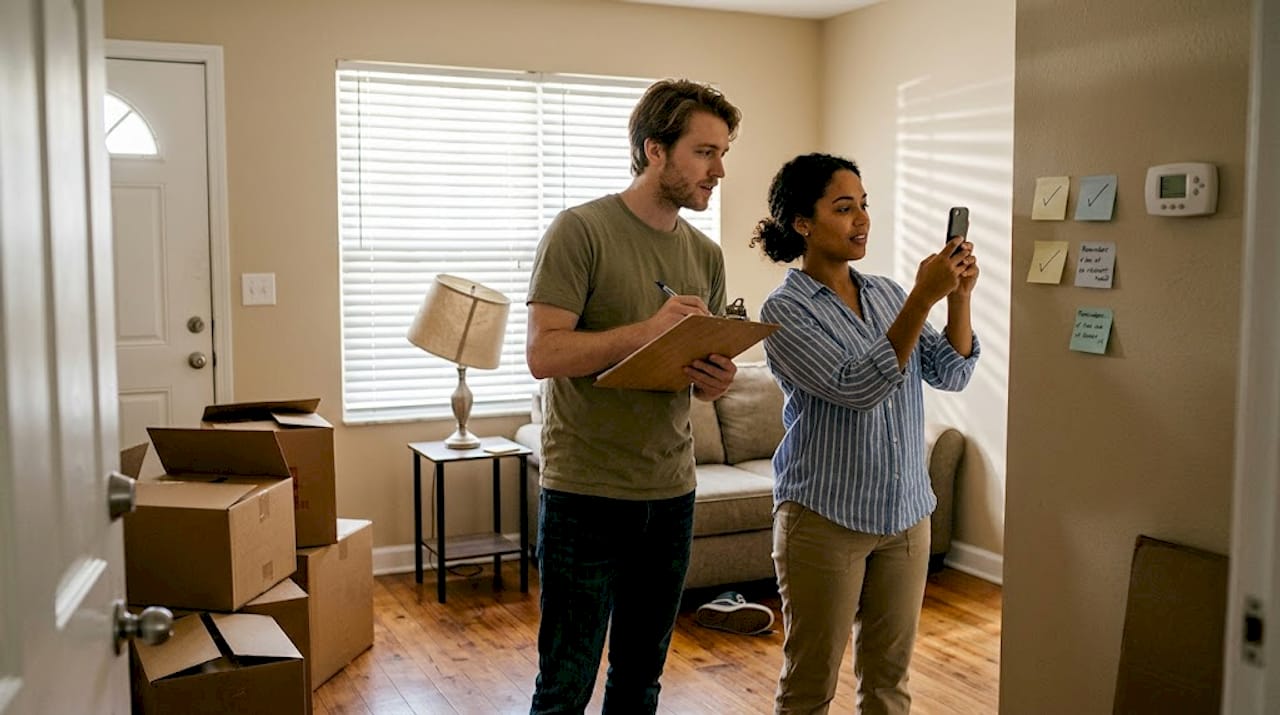
TL;DR:
Thorough, documented cleaning and inspections prevent costly deposit disputes.
Florida law requires returning the property in the same condition minus normal wear and tear.
Using detailed checklists and timestamped photos provides strong proof during move-out inspections.
Missing one cleaning detail during a move can cost you hundreds of dollars from your security deposit. Many renters in St. Augustine, Ponte Vedra, and Nocatee assume a general tidy-up is enough. It rarely is. Landlords and property managers look closely at appliances, grout lines, baseboards, and outdoor spaces. A documented, room-by-room checklist is what separates a smooth transition from a costly dispute. This guide walks you through Florida’s legal framework, the key components of an effective checklist, common pitfalls to avoid, and when professional help makes the most sense for your situation.
Table of Contents
Key Takeaways
Point | Details |
Local law awareness | Understanding Florida deposit laws and local checklist norms prevents costly disputes. |
Document everything | A thorough checklist with timestamped photos is your best protection as renter or owner. |
Focus on humidity risks | In St. Augustine, Ponte Vedra, and Nocatee, humidity can turn minor cleaning lapses into big issues. |
Professional helps | Hiring local experts can safeguard your deposit and ensure compliance with lease and legal standards. |
Understanding Florida move in/move out laws for St. Augustine, Ponte Vedra, and Nocatee
With the stakes set, let’s clarify how state law and local standards define your obligations and protections during a move.
Florida does not require landlords or renters to use a specific state-issued cleaning checklist. However, state law is clear about one thing: no state-mandated checklist exists, but you must return the property in the same condition it was in when you moved in, minus normal wear and tear. That phrase, “normal wear and tear,” carries enormous weight in any deposit dispute.
On the landlord’s side, Florida sets strict timelines. Deposits must be returned within 15 days if no deductions are made, or the landlord must provide an itemized written notice of deductions within 30 days. Missing these deadlines can actually forfeit the landlord’s right to make deductions entirely. Knowing this timeline helps you follow up at the right time.
What counts as normal wear and tear?
This is where most disputes start. Normal wear and tear refers to the gradual deterioration that happens through everyday use. It does not mean neglect or damage caused by misuse.
Category | Normal wear and tear | Tenant-caused damage |
Walls | Small nail holes, light scuffs | Large holes, crayon marks, stains |
Floors | Slight fading, minor scratches | Deep gouges, pet stains, burns |
Paint | Minor fading from sunlight | Unapproved colors, significant peeling |
Fixtures | Loose handles from daily use | Broken faucets, cracked tiles |
Appliances | Normal buildup from use | Burnt coils, food buildup, broken parts |
For renters in the St. Augustine area, high humidity adds another layer. Mold from poor ventilation can be considered tenant-caused damage if the lease requires you to maintain airflow. Keep this in mind when reviewing your lease.
“Florida law places clear expectations on both parties: return the property in move-in condition, and landlords must act within precise timelines or lose the right to deduct from deposits.”
A printable move out checklist tailored to Florida standards gives you a concrete reference point from day one. Review move in/move out cleaning info to understand exactly what professional teams cover in this area.
Key components of a thorough move in/move out cleaning checklist
Now that you know the law, it’s time to get practical. Here are the essentials for a checklist that protects both renter and owner.
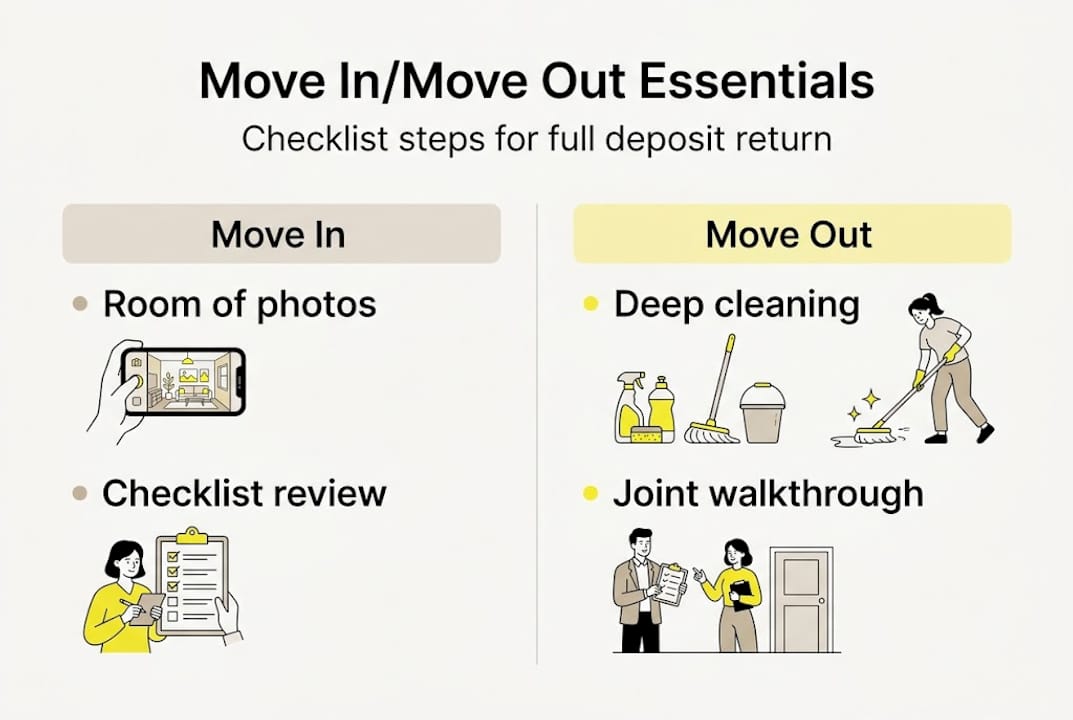
A solid checklist covers every room and every surface. Skipping one area, even a small one, gives the other party grounds to dispute the property’s condition. Note that professional cleaning is not required by Florida law unless your lease specifically states it. But thorough, documented cleaning is always required.
Kitchen
Clean inside and outside of all appliances (oven, refrigerator, microwave, dishwasher)
Wipe down cabinet interiors and exteriors
Scrub sink and faucet, remove mineral deposits
Clean stovetop grates and drip pans
Degrease range hood and filter
Bathrooms
Scrub shower tile and grout
Clean toilet inside and out, including base and behind tank
Wipe down all surfaces including cabinet undersides
Remove soap scum from tub and glass doors
Check for mold or mildew in high-moisture areas
Living areas and bedrooms
Vacuum all furniture and under cushions
Wipe baseboards and door frames
Clean light fixtures and ceiling fans
Spot-clean walls and switch plates
Clean windows, tracks, and sills inside
Outdoor and utility spaces
Sweep patios, porches, and entryways
Clean laundry appliances inside and out
Remove any debris from garage or storage areas
Pressure wash driveways if required by lease
For renters with pets, odor treatment and stain removal in carpets and upholstery are not optional. These are common reasons deposits get reduced. A thorough move out cleaning procedure addresses pet-related issues directly. If you’re unsure whether your cleaning will meet standards, using professional cleaners eliminates that uncertainty.
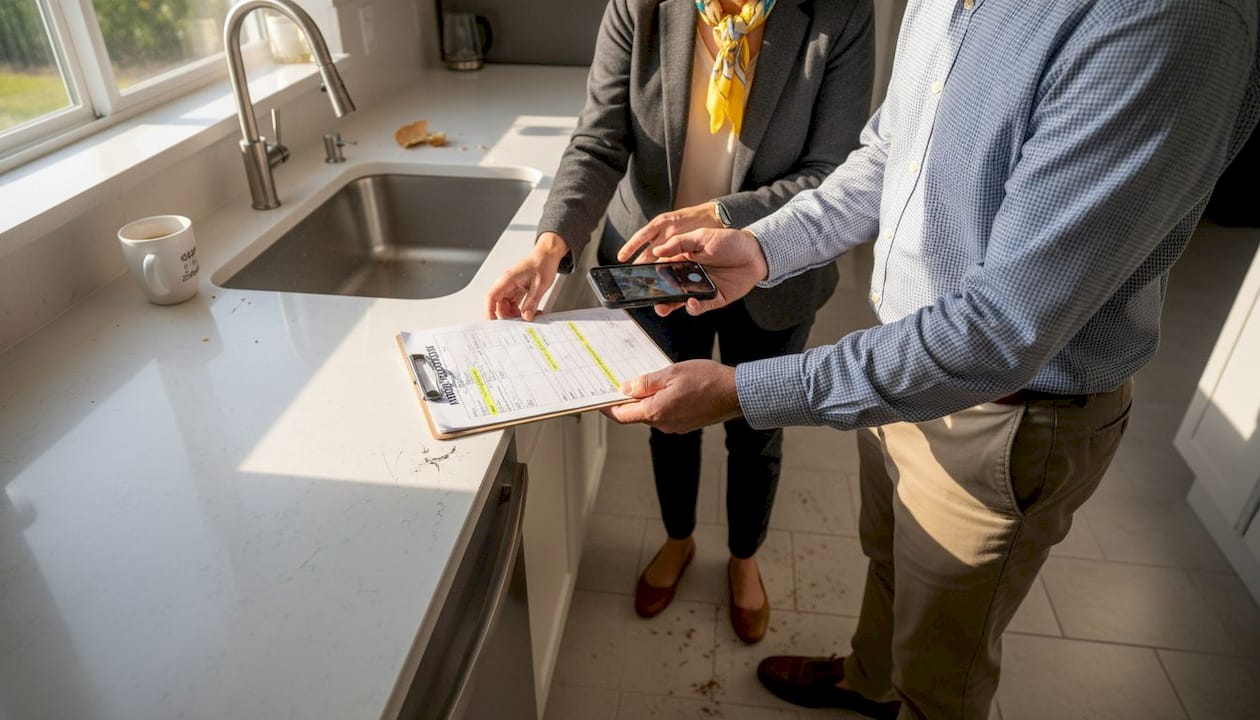
Pro Tip: Do a joint walkthrough with your landlord before you hand over keys. Take timestamped photos of every room, every appliance, and every corner. This is your strongest protection if a dispute arises later.
Move in vs move out: What changes (and what stays the same)
While checklists anchor every move, the focus shifts dramatically between arrival and departure. Let’s break it down.
When you move in, your goal is to document the property’s existing condition, not to clean it to perfection yourself. When you move out, your goal flips: you must restore the property to that original documented condition.
Move-in checklist priorities (numbered)
Photograph every room before unpacking anything
Note any existing damage in writing and send it to your landlord within 24 to 48 hours
Test all appliances, outlets, faucets, and fixtures
Check for signs of mold, pest activity, or water stains
Confirm that all agreed-upon repairs are completed before you sign off
Request a copy of the previous tenant’s move-out inspection if possible
Move-out checklist priorities (numbered)
Reference your original move-in documentation
Address every item on the agreed checklist, room by room
Complete all cleaning before your scheduled inspection
Do a final walkthrough alone, then with the landlord
Collect written confirmation that the walkthrough occurred
Follow up on deposit return within the legal timeframe
Checklist element | Move-in focus | Move-out focus |
Photography | Document existing condition | Prove restored condition |
Appliances | Test and note issues | Clean inside and out |
Walls and floors | Note damage | Address stains, marks, and holes |
Outdoor spaces | Note state of landscaping | Return to original condition |
Plumbing | Check for leaks or damage | Ensure functionality |
For long-term tenants, edge cases like mold or water damage require extra attention. Multi-year tenancies allow slightly more allowance for wear, but significant issues like water intrusion or mold growth require remediation before the space is considered clean. Use the St. Augustine-specific checklist to match local property standards, and review high-traffic rental cleaning for properties with heavy turnover.
Expert advice: Avoiding common move in/move out cleaning pitfalls
Mistakes during cleaning and documentation routinely cost tenants and owners. Here’s how to sidestep them with local wisdom.
Deposit disputes are far less common when both parties use preventive checklists. Without documentation, there is almost no way to prove what condition the property was in at any point in time.
Most common documentation mistakes
Taking photos only in wide shots, missing close-up damage or cleanliness
Using photos without timestamps or without visible context
Failing to document outdoor spaces, utility areas, and garage
Not sending written notice of pre-existing issues to the landlord
Relying on verbal agreements instead of written records
Most neglected cleaning tasks that cause deposit loss
Under and behind kitchen appliances
Refrigerator coils and drip trays
Grout lines in bathrooms and kitchen
Baseboards throughout the entire unit
Inside closets, shelving, and drawers
Light fixtures and ceiling fan blades
Window tracks and door tracks
Florida’s humidity creates a specific risk: mold can develop inside cabinets, under sinks, and in bathroom corners during even a short tenancy. If mold is visible at move-out, landlords may dispute whether it was pre-existing or tenant-caused. This is why thorough move-in photos, including inside cabinets, are critical.
Pro Tip: If you spot mold at move-in, photograph it immediately and notify your landlord in writing the same day. This protects you from being charged for a condition that existed before your tenancy.
Knowing the benefits of professional cleaners helps you decide when DIY is enough and when it isn’t. For post-construction properties, mold remediation, or heavily soiled units, outsourcing rental cleaning is almost always worth the cost compared to a deposit loss.
Why a detailed checklist beats assumptions every time
Here’s something we see repeatedly: experienced renters and landlords who have managed multiple properties still lose deposit disputes because they relied on common sense instead of documentation.
“Just clean up and leave it decent” sounds reasonable. But decent is not a legal standard. The lease and the move-in inspection report are the only documents that matter in a dispute. We’ve seen cases where a tenant lost a portion of their deposit specifically because no one checked under the refrigerator. The landlord found grease buildup. There were no move-in photos to prove it was already there.
In a market like St. Augustine, where many properties are vacation rentals part of the year, standards can be higher than in typical long-term rentals. Landlords in Nocatee and Ponte Vedra neighborhoods often have detailed inspection protocols tied to HOA standards. Assumptions about what’s “clean enough” can be costly.
Over-documentation is never a mistake. Under-documentation almost always costs someone money. Our advice: use a cleaning guide for Jacksonville owners as a regional reference, and document more than you think you need to. It takes an extra 30 minutes and can save you hundreds.
Connect with expert cleaning help for worry-free moves
If you want peace of mind or need help tackling tough cleaning demands, here’s where to turn locally.
Whether you’re a renter preparing for move-out or a homeowner getting a property ready for new tenants, a professional cleaning team ensures nothing gets missed.

At My Lemon Maids, we provide thorough move in/move out cleaning for properties throughout St. Augustine, Ponte Vedra, and Nocatee. Our teams work room by room, covering every surface, appliance, and corner that inspectors check. We also offer deep cleaning services for properties with heavy buildup, pet odors, or post-construction residue. Get in touch today for a quote and let us handle the hard part so you can focus on your move.
Frequently asked questions
Do I have to hire a professional cleaning service when moving out in Florida?
No. Florida law only requires you to return the property in the same condition as move-in, minus normal wear. Professional cleaning is only required if your lease specifically states it.
What counts as normal wear and tear versus damage?
Normal wear includes faded paint and small nail holes from regular use. Damage includes stains, large holes, and pet-related issues, which can directly affect how much of your deposit you receive back.
How can I prove I left my rental clean enough for a full deposit return?
A detailed room-by-room checklist combined with timestamped photos and a joint walkthrough with your landlord provides the clearest documentation to prevent disputes.
What happens to the deposit if my place has mold or water damage?
Mold and water issues require remediation before standard cleaning applies. Deposit return still follows the normal legal timeline, even if the property was abandoned by the tenant.
Recommended
Comments