What Is Green Cleaning and Why It Matters
- jeffwashausen
- Jan 26
- 13 min read

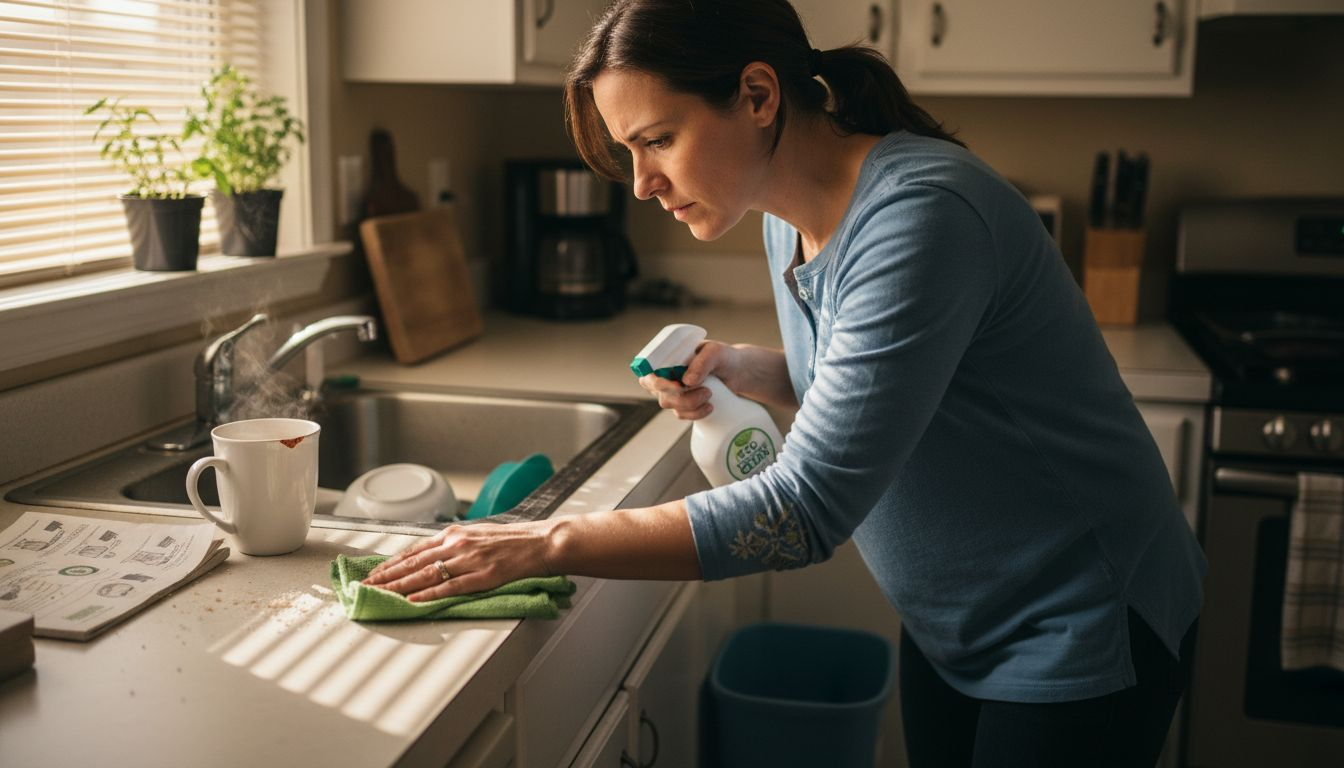
Choosing the best cleaning methods for your St. Augustine or Nocatee property can feel overwhelming when you want results that are safe for families, guests, and Florida’s sensitive coastal environment. More homeowners and property managers now seek eco-friendly cleaning alternatives that go beyond labels and deliver cleaning to protect health without harming the environment. This guide breaks down exactly what green cleaning means, clears up common myths, and shows how to confidently select products and practices that truly benefit your home and the wider community.
Table of Contents
Key Takeaways
Point | Details |
Green Cleaning Focus | Green cleaning prioritizes health and environmental protection, using non-toxic and biodegradable products. |
Certification Importance | Always opt for cleaning products with third-party certifications like EPA Safer Choice or Green Seal to ensure safety and effectiveness. |
Training and Protocols | Proper training and structured cleaning protocols are essential for effective green cleaning, preventing ineffective applications and chemical buildup. |
Evaluate Product Performance | Regularly assess cleaning products to ensure they meet performance standards and make adjustments as needed for optimal results. |
Green Cleaning Defined and Common Myths
Green cleaning means using products and methods that protect your health and the environment at the same time. Rather than relying on harsh chemicals that can linger in your home or damage ecosystems, green cleaning focuses on cleaning to protect health without harming the environment. This approach matters especially in St. Augustine and the surrounding areas, where our coastal environment is sensitive to chemical runoff, and where many of you are managing vacation rental properties that guests expect to be both clean and safe. The movement has grown because people like you are recognizing that traditional cleaning doesn’t have to come at the cost of respiratory health, water quality, or environmental responsibility.
However, green cleaning gets misunderstood in several important ways. The biggest myth is that any product labeled “green” or “eco-friendly” automatically works well and poses no health risks. This isn’t accurate. Products claiming to be green must meet specific standards including biodegradability, low toxicity, and low volatile organic compound (VOC) content to actually qualify. Look for third-party certifications like EPA Safer Choice when selecting products, as these provide real assurance rather than marketing claims alone. Another common misconception is that green cleaning takes significantly longer or leaves surfaces less clean than conventional methods. Property managers in Ponte Vedra who have switched over report that with the right techniques and products, green cleaning delivers the same results in comparable timeframes. Some homeowners also assume green cleaning products cost considerably more, but when you factor in health benefits, reduced respiratory issues among family members, and environmental protection over time, the investment makes sense. Many people overlook that certain green cleaning products can still emit volatile organic compounds affecting respiratory health if not chosen carefully, so certification matters more than the label alone.
The practical reality is that green cleaning isn’t one specific method or product line. It’s an approach that combines safer chemical choices, proper ventilation, appropriate techniques for different surfaces, and an understanding that protecting your family’s health and your community’s environment are interconnected goals. When you choose green cleaning for your Nocatee home or rental property, you’re not sacrificing cleanliness or convenience. You’re making a deliberate choice to separate marketing hype from genuine performance, and to recognize that the cleaning products you use daily actually affect indoor air quality, water systems, and long-term health outcomes.
Pro tip: When evaluating green cleaning products, check for third-party certifications like EPA Safer Choice or Green Seal rather than relying on “natural” or “eco-friendly” labels, and always verify that products are certified to have low VOC content before using them in enclosed spaces like bedrooms or bathrooms.
Types of Eco-Friendly Cleaning Products
Eco-friendly cleaning products come in several categories, each designed to handle different cleaning tasks without the harsh chemicals found in conventional cleaners. The main types include all-purpose cleaners, specialized disinfectants, laundry detergents, and targeted products for bathrooms, kitchens, and floors. What sets these apart is their formulation: they exclude harmful chemicals like ammonia, bleach, and phthalates that can trigger respiratory issues, skin irritation, and long-term health problems. For homeowners and property managers in St. Augustine managing vacation rentals, understanding these categories helps you select the right product for each space while maintaining the clean, fresh appearance your guests expect.
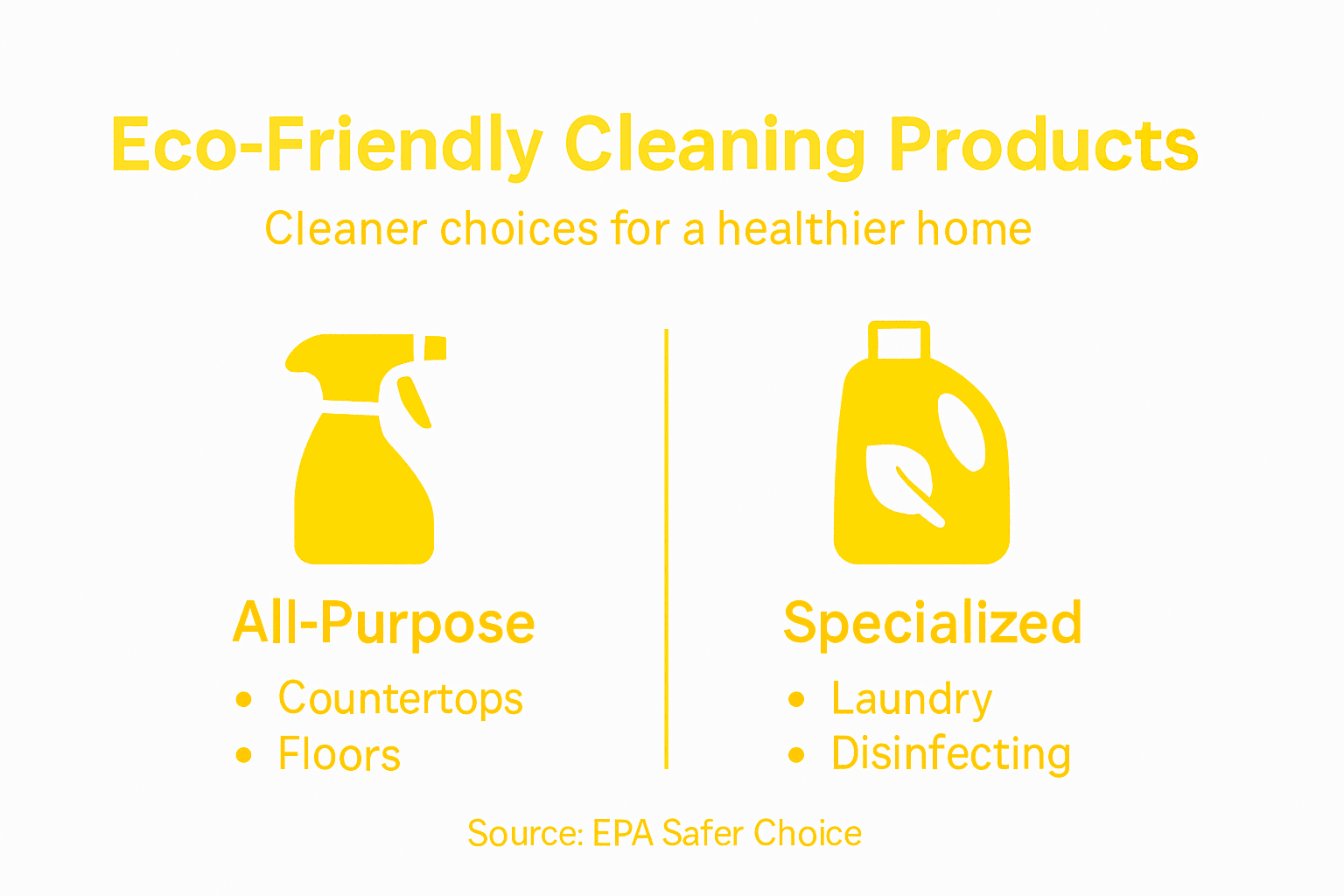
All-purpose cleaners form the backbone of most green cleaning routines and work on countertops, walls, and general surfaces throughout your home. These typically use plant-based ingredients or safer synthetic compounds that break down dirt and grime without leaving toxic residue. Specialty disinfectants offer targeted protection when you need pathogen control, particularly important in bathrooms and kitchens where bacteria and viruses concentrate. Laundry detergents formulated with biodegradable ingredients clean fabric effectively while reducing the chemical load entering water systems. Eco-friendly products with low or zero volatile organic compounds represent a significant shift from traditional cleaners that emit harmful fumes affecting indoor air quality. When selecting products, look for certifications from trusted third-party organizations. EPA Safer Choice and Green Seal indicate that products meet rigorous standards for both human health and environmental performance, not just marketing claims.
The transparency of ingredient labeling has improved significantly in recent years, thanks in part to legal requirements like California’s Cleaning Product Right to Know Act. This means you can now make informed decisions by reviewing what goes into the bottles you bring into your home. For Nocatee properties and Ponte Vedra residences, choosing eco-friendly products across all categories creates a healthier indoor environment while reducing your contribution to water pollution and ecosystem damage. You don’t need to switch everything at once. Many people find success starting with maintaining consistent cleaning habits using safer products in high-traffic areas, then gradually replacing other products as they run out. The variety available now means you can find eco-friendly options that match your specific cleaning needs and budget without compromise.
Pro tip: Stock your cleaning cabinet with one multi-purpose cleaner, one disinfectant, one laundry detergent, and one specialty product for bathrooms or kitchens, all certified by EPA Safer Choice or Green Seal, and you’ll handle 95 percent of household cleaning tasks without needing a dozen different bottles under your sink.
How Green Cleaning Works in Practice
Green cleaning in practice is far more than swapping one bottle of cleaner for another. It involves a complete shift in how you approach cleanliness, combining safer products with proven techniques and smart equipment choices. The foundation rests on using products that are low in toxicity and biodegradable, but the real magic happens when you pair those products with proper procedures and the right tools. For property managers in St. Augustine and Ponte Vedra managing vacation rentals, this means your guests arrive to genuinely clean spaces without chemical odors that linger in fabrics and air vents.
The practical implementation starts with product selection and dilution. Most green cleaners work effectively at lower concentrations than conventional products, which means you use less chemical overall and reduce costs simultaneously. Effective green cleaning programs require structured protocols including staff training, proper product dilution, and equipment selection that minimizes waste. Microfiber tools deserve special attention here. These innovative cloths and mop heads capture dirt and bacteria using physical action rather than relying solely on chemical strength, allowing you to reduce both water consumption and chemical use significantly. One microfiber cloth can replace dozens of disposable paper towels, translating to less trash heading to landfills. When you’re cleaning bathroom tile, kitchen counters, or hardwood floors in a Nocatee home, microfiber tools accomplish the job with plain water or a small amount of diluted green cleaner where traditional methods would require multiple chemical applications.
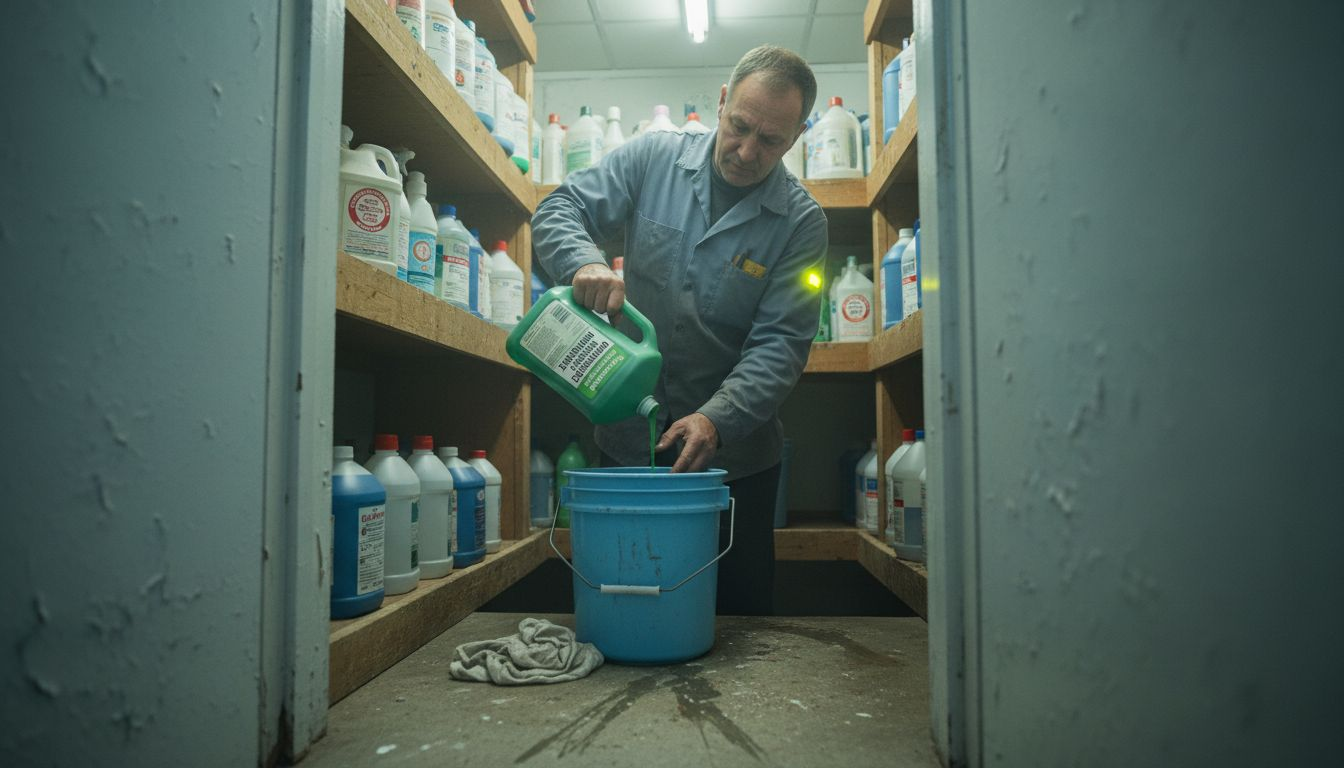
Procedural training matters more than many people realize. Your cleaning approach should follow a logical sequence: remove visible clutter, dust high surfaces first so debris falls downward, work from top to bottom in each room, and save detailed tasks like scrubbing grout for last. This prevents recontaminating surfaces you’ve already cleaned. Waste minimization naturally follows from these practices. Using concentrated products, properly diluting them, selecting reusable tools, and implementing efficient procedures means you purchase less packaging, generate less trash, and reduce your environmental footprint without sacrificing the spotless results your property demands. The balance between effective disinfection and chemical reduction becomes easier when you understand that physical cleaning removes the majority of pathogens, and targeted disinfection handles the rest.
Pro tip: Train yourself or your cleaning staff to follow this sequence in every room: remove items, dust high surfaces, wipe mid-level surfaces with microfiber cloths and diluted green cleaner, then tackle floors and detailed work, which prevents re-soiling surfaces and cuts total cleaning time by 15 to 20 percent.
Safety, Effectiveness, and Certification Standards
When you’re choosing green cleaning products for your St. Augustine home or vacation rental property, certification standards separate genuine performance from marketing hype. Third-party certifications act as your assurance that a product has been independently tested and verified to meet strict criteria for both safety and effectiveness. The most trusted certifications include Green Seal, EPA Safer Choice, and LEED standards, each representing significant commitment to protecting human health and environmental quality. These organizations don’t simply accept manufacturer claims. They conduct rigorous testing, evaluate toxicity levels, assess biodegradability, and verify that products actually work as promised before granting certification status.
Green Seal certification ensures products meet rigorous standards for health, environmental sustainability, and performance through comprehensive evaluation of toxicity, biodegradability, and life cycle impacts. When you see the Green Seal logo on a bottle, you know that product has undergone testing far more thorough than anything required by law. EPA Safer Choice products similarly demonstrate that they contain safer chemical formulations without sacrificing cleaning power. For property managers in Ponte Vedra and Nocatee managing vacation rentals, these certifications matter because guests increasingly expect properties to demonstrate genuine commitment to health and sustainability. A certified green cleaner allows you to advertise confidently that your property prioritizes occupant safety. The standards also protect your cleaning staff. Exposure to harsh chemicals accumulates over years, causing respiratory issues, skin problems, and systemic health effects that shorter-term exposure might not immediately reveal.
The relationship between certification and actual building standards has strengthened significantly. LEED certification encompasses green building standards that promote selection of certified cleaning products to reduce health risks and environmental harm while protecting indoor air quality. This means that if your property pursues or maintains LEED certification, your cleaning product choices directly support that status. The standards require documented proof that products meet specified certifications. You cannot simply claim a product is green without documentation. This transparency protects you, your guests, and your staff by ensuring that the products you purchase genuinely deliver the safety and performance benefits they advertise. When comparing products, effectiveness matters as much as safety. A certified green cleaner that fails to remove soap scum or disinfect properly becomes a liability. The certifications ensure both attributes exist simultaneously. Start by checking product labels for visible certification marks, then verify those certifications through the issuing organizations’ websites if questions arise.
Pro tip: Create a simple checklist of three to four certified products you trust, photograph the labels showing certification marks, and share this list with your cleaning team or household members so everyone uses consistently approved products and you avoid accidental purchases of unverified alternatives.
Here’s a quick comparison of popular green cleaning certifications and what they guarantee:
Certification | Health Standards Focus | Environmental Criteria | Recognized By |
Green Seal | Low toxicity; safe for users | Biodegradable; reduced lifecycle impact | Cleaning industry, LEED |
EPA Safer Choice | Safer chemical ingredients | Strict environmental safety testing | Government, consumers |
LEED Building Req. | Promotes certified products | Encourages overall building sustainability | Property managers, developers |
Legal Issues and Compliance for Green Cleaning
Green cleaning isn’t just an environmental preference in many jurisdictions. It’s becoming a legal requirement. Various U.S. states and local governments have adopted regulations and green building codes that directly impact what cleaning products you can use and how you must use them. Florida, where St. Augustine, Ponte Vedra, and Nocatee are located, sits within a state increasingly focused on environmental protection due to coastal sensitivity and groundwater concerns. Understanding the legal landscape protects you from inadvertent violations that could result in fines, liability issues, or compliance problems when managing residential properties or vacation rentals. Environmental compliance means conforming to all applicable laws governing chemical safety, emissions, labeling, and waste management related to cleaning products.
California’s Cleaning Product Right to Know Act established a significant precedent by mandating ingredient transparency on cleaning product labels. While this specific law applies in California, similar transparency requirements are spreading to other states and local jurisdictions. Environmental compliance requires conforming to applicable laws including chemical safety, emissions standards, labeling requirements, and proper waste management. For property owners managing vacation rentals in the St. Augustine area, this means you should verify what products your cleaning service uses and ensure they can document the ingredients and certifications. If a product isn’t clearly labeled with its ingredients and third-party certifications, it may not meet emerging compliance standards. Many commercial cleaning companies now maintain product documentation specifically because they anticipate stricter regulations arriving in their jurisdictions. The trend toward requiring green cleaning practices and products through building codes reflects growing recognition that occupant health and environmental protection are legitimate regulatory concerns rather than optional marketing features.
Liability considerations matter significantly for property managers. If a guest or staff member experiences health effects from chemical exposure and can demonstrate that non-compliant or undisclosed products caused the harm, liability exposure increases substantially. Documentation becomes your defense. Keeping records of what cleaning products you use, their certifications, and how they’re stored and handled creates an audit trail demonstrating reasonable care. Beyond individual property concerns, broader regulatory compliance affects resale value and insurance coverage. Properties marketed as green certified or compliant with environmental standards command premium prices and attract environmentally conscious guests willing to pay more. Conversely, properties with documented chemical incidents face insurance penalties and reduced marketability. The smart approach involves selecting certified green cleaning products now, documenting your choices, and training any cleaning staff on proper use and safety protocols. This positions your property ahead of regulations that will likely tighten rather than loosen over the coming years.
Pro tip: Request and retain a written inventory from your cleaning service listing every product they use, including EPA Safer Choice or Green Seal certification numbers, and review it annually to ensure compliance with Florida’s environmental standards and to protect yourself against potential liability claims.
Common Pitfalls and How to Avoid Them
Even when you commit to green cleaning, common mistakes can undermine your efforts and waste money. The biggest pitfall is falling for greenwashing, where companies use misleading language like “natural,” “eco-friendly,” or “plant-based” without substantiation or third-party certification. A bottle labeled “all natural cleaner” might still contain toxic chemicals or ineffective ingredients. You’ve seen these products at stores with green packaging and vague environmental claims that sound impressive but lack any verifiable backing. Avoiding pitfalls requires transparency and backing claims with verifiable data rather than relying on marketing language alone. For property managers in Ponte Vedra and Nocatee, this means requesting certification documentation from cleaning services rather than accepting verbal assurances. If a company cannot show you EPA Safer Choice or Green Seal certifications, move forward cautiously. Another major mistake involves assuming that because a product is certified green, you can use unlimited quantities or apply it improperly. Over-concentration of even safe cleaners can create buildup, reduce effectiveness, and waste product. Green cleaners work best when properly diluted and applied according to instructions, which means following guidance more carefully than you might with conventional products.
Staff training and inconsistent application represent underestimated pitfalls. If you hire a cleaning service or train household members, inadequate instruction on green cleaning protocols can backfire. Someone unfamiliar with microfiber cloth techniques might spray excessive product hoping to compensate for poor technique. Neglecting staff training on green protocols reduces product effectiveness and increases chemical exposure risks. Even certified products perform poorly when applied incorrectly. Take time to demonstrate proper dilution ratios, explain why certain tools matter, and discuss why green cleaning requires slightly different procedures than conventional methods. This investment pays dividends through better results and fewer product waste issues. A third pitfall involves product selection that doesn’t match your actual cleaning needs. One all-purpose cleaner cannot effectively handle every surface. Glass, tile, grout, hardwood floors, and stainless steel each benefit from targeted approaches. Choosing insufficient products forces you to use more product overall, defeating the efficiency benefits of green cleaning. Building a small toolkit with certified products for different purposes ensures you reach optimal results without overshooting.
Regularly evaluating whether your chosen products are actually working keeps you from drifting back to conventional alternatives out of frustration. Set a timeline to assess results after switching to green cleaning. Does your bathroom gleam as cleanly as before? Are guests commenting positively on cleanliness during their stays? Are your staff members experiencing fewer respiratory issues? Honest evaluation after 30 to 60 days helps you identify which products truly work and which need replacement. Transparency with yourself about results prevents returning to ineffective products and validates your commitment to green cleaning for your St. Augustine property. Finally, avoid the pitfall of trying to switch everything simultaneously. Gradual transition to certified green products allows you to identify what works best while managing costs incrementally.
The table below summarizes common green cleaning pitfalls and how to prevent them:
Pitfall | Impact if Ignored | Prevention Strategy |
Greenwashing claims | Use of unsafe or ineffective products | Require third-party certifications |
Overusing product | Increased buildup and costs | Follow proper dilution instructions |
Insufficient staff training | Poor results, potential health risks | Provide hands-on protocol training |
Wrong product selection | Surfaces left inadequately cleaned | Match product to specific task |
Pro tip: Maintain a simple spreadsheet tracking which certified green products you use, where you purchased them, their cost per application, and your satisfaction rating, then review quarterly to identify which products consistently deliver results and which should be replaced.
Embrace True Green Cleaning with Trusted Experts
Understanding the challenge of separating greenwashing from genuine eco-friendly practices is key to maintaining a healthy home or vacation rental. You want cleaning solutions that truly protect your family, guests, and environment without sacrificing effectiveness or risking your indoor air quality. The article highlights essential concepts like using certified products, proper dilution, and microfiber tools to maximize health and sustainability benefits while avoiding toxic chemicals.
At My Lemon Maids, we specialize in residential and commercial cleaning tailored to these green cleaning principles. Whether you need thorough deep cleaning, regular maintenance, or cleaning for your Airbnb property, our team uses only vetted, certified eco-friendly products combined with smart techniques that deliver spotless results and peace of mind.

Take the first step toward a cleaner, healthier space by choosing a cleaning service that truly understands green cleaning standards and compliance. Visit My Lemon Maids today to book your eco-conscious cleaning and experience the difference of genuine green cleaning done right.
Frequently Asked Questions
What is green cleaning?
Green cleaning refers to using products and methods that protect health and the environment by avoiding harsh chemicals that can harm indoor air quality and ecosystems.
Why is green cleaning important?
Green cleaning is important because it promotes health by reducing exposure to toxic chemicals, protects water quality, and minimizes environmental impact, especially in sensitive areas.
Are green cleaning products effective?
Yes, many green cleaning products are effective when chosen correctly. Look for products with third-party certifications like EPA Safer Choice to ensure safety and performance standards are met.
How can I ensure the cleaning products I use are genuinely green?
To ensure your cleaning products are genuinely green, check for certifications such as Green Seal or EPA Safer Choice. This guarantees that they meet strict health and environmental safety criteria.
Recommended
Comments