Why Choose Commercial Cleaning for Your Business
- support760146
- Feb 25
- 11 min read
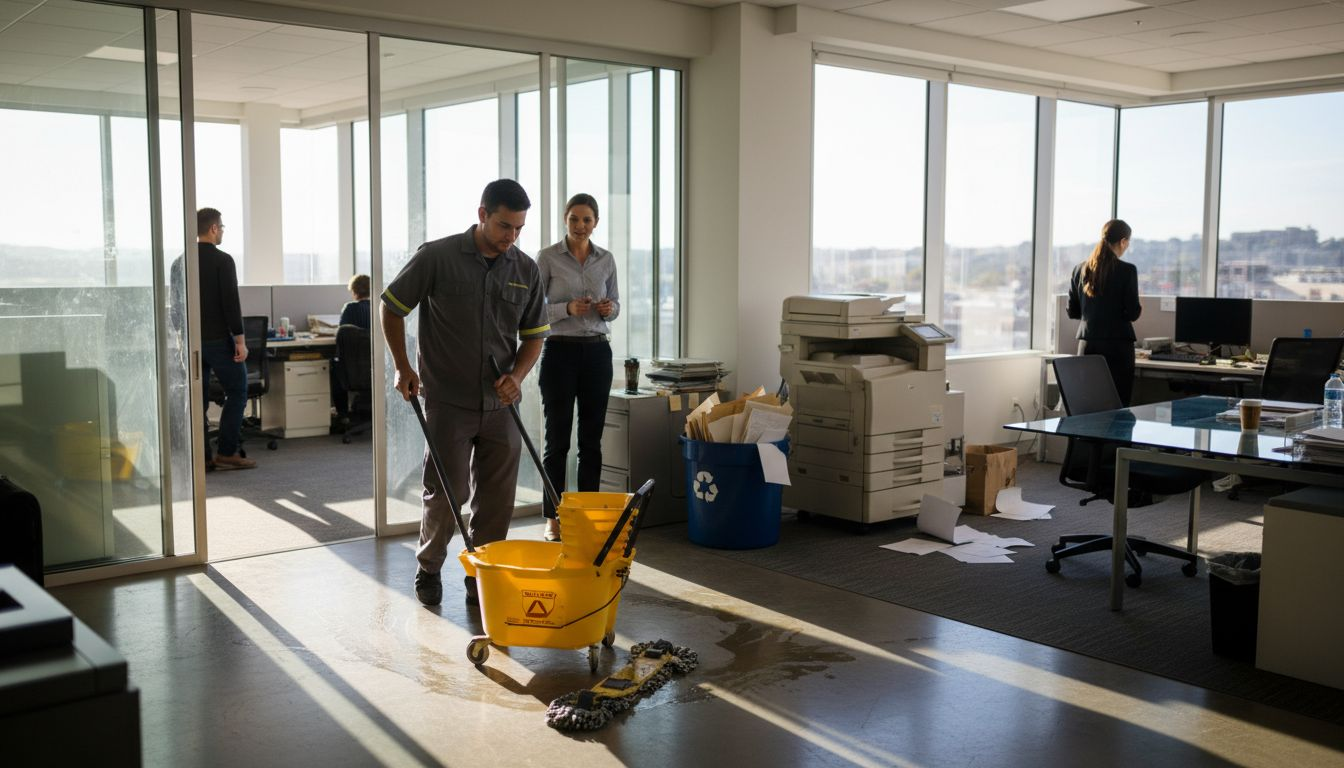
Keeping your office or vacation rental in St. Augustine or Ponte Vedra spotless often means facing complex cleaning needs most cannot handle alone. A cluttered lobby or missed turnover cleaning can quickly drive away clients and guests, impacting your reputation and bottom line. Professional commercial cleaning covers more than just visible dirt by using trained teams and industry standards to safeguard hygiene so your space remains welcoming and compliant every day.
Table of Contents
Key Takeaways
Point | Details |
Importance of Professional Cleaning | Commercial spaces require specialized cleaning services to maintain hygiene and safety standards due to their size and traffic. |
Difference Between General and Deep Cleaning | General cleaning is performed regularly to maintain appearance, while deep cleaning targets hidden dirt and allergens less frequently. |
Health and Productivity Benefits | A clean work environment enhances employee health and productivity, reducing absenteeism and improving focus. |
Financial and Legal Implications | Neglecting cleaning can lead to fines, liability risks, and higher long-term costs, making professional cleaning a smart investment. |
Defining Commercial Cleaning in Business Spaces
Commercial cleaning goes far beyond what a single person can handle with a mop and bucket. It involves systematized cleaning of office buildings, retail spaces, medical facilities, restaurants, and other business environments using professional-grade equipment and trained teams.
Unlike residential cleaning, commercial spaces require specialized approaches. You’re dealing with high-traffic areas, multiple restrooms, break rooms, and often complex HVAC systems that collect dust and debris differently than homes do.
What Commercial Cleaning Actually Covers
Commercial cleaning services include a broad range of responsibilities tailored to your specific business type:
Trash removal and recycling management from all areas and common spaces
Floor care including vacuuming carpets, mopping hard surfaces, and deep cleaning tile and grout
Restroom sanitation with disinfecting toilets, sinks, mirrors, and tile surfaces
Surface disinfection of desks, tables, door handles, light switches, and equipment
Kitchen and break room cleaning including appliances, countertops, and sinks
Window cleaning on interior and exterior surfaces
Dusting of furniture, baseboards, and shelving
For vacation rentals in St. Augustine and Ponte Vedra, this extends to between-guest turnover cleaning where every surface gets disinfected and the space returns to showroom condition within hours.
Professional commercial cleaning follows accredited industry standards to ensure effectiveness and safety in business spaces.
The Difference Between Standard and Deep Cleaning
Your office probably gets standard cleaning weekly or bi-weekly. This covers visible dirt, restroom sanitation, and trash removal.
Deep cleaning happens less frequently—usually quarterly or annually. It targets areas people don’t see: behind furniture, inside HVAC vents, baseboards, ceiling corners, and light fixtures. Deep cleaning removes accumulated dust and allergens that regular cleaning misses.
For office environments, proper cleaning directly impacts employee health and productivity, making the frequency and depth of your cleaning strategy matter significantly.
Why Business Spaces Need Professional Handling
Commercial spaces present challenges residential cleaning doesn’t:
Square footage - A 5,000-square-foot office takes different equipment and crew coordination than a home
Traffic patterns - Multiple people create more contamination daily
Specialized surfaces - Marble floors, sensitive electronics, and commercial-grade carpets need specific care
Compliance requirements - Some businesses must maintain health department standards
Scheduling constraints - Cleaning happens during off-hours to avoid disrupting operations
Commercial cleaning uses industrial-strength equipment and EPA-approved disinfectants that residential cleaners typically don’t employ.
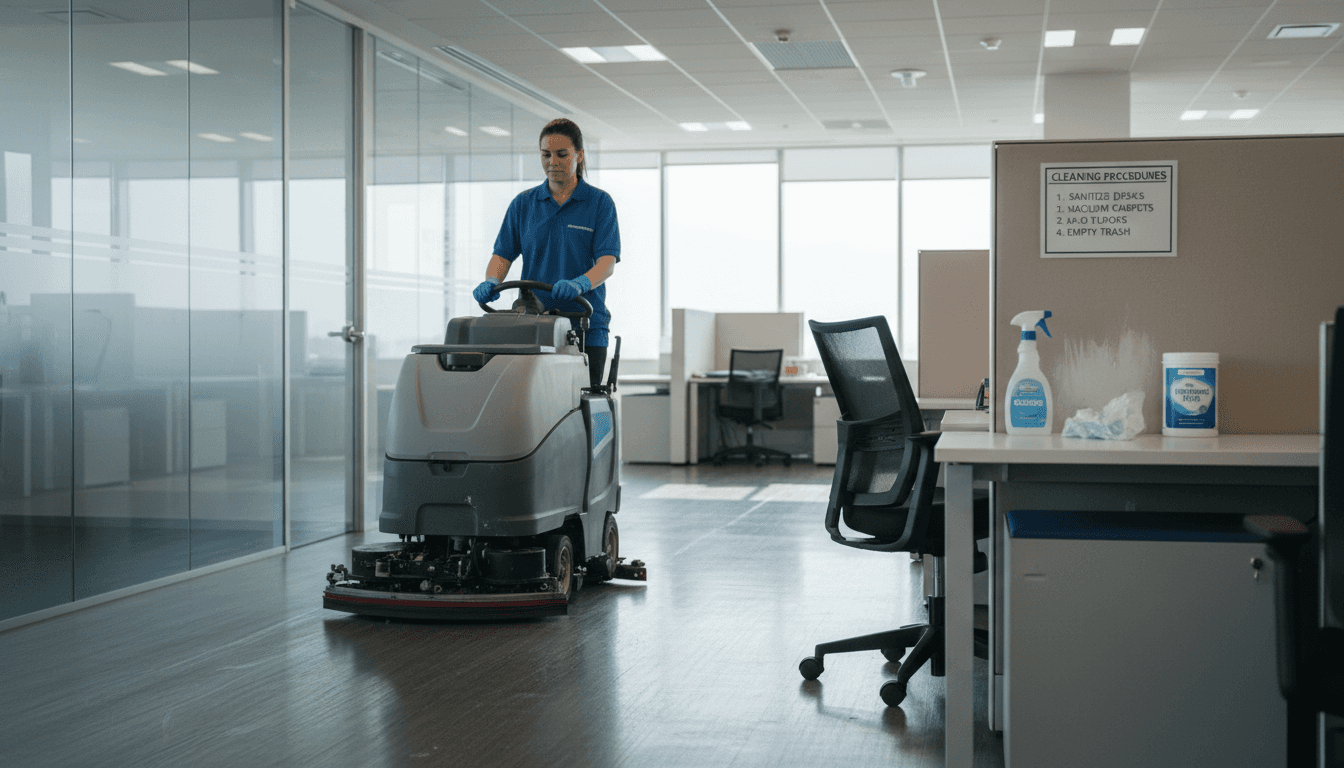
Pro tip: Define your cleaning frequency and depth needs before signing a contract—standard weekly service might suffice for offices, while vacation rentals typically require daily turnover or between-guest deep cleaning to maintain guest satisfaction.
Types of Commercial Cleaning Services Offered
Commercial cleaning breaks down into two main categories: general cleaning and deep cleaning. Your business probably needs both, but at different frequencies and with different purposes in mind.
General cleaning keeps your space functional day-to-day. Deep cleaning handles what builds up over time—the hidden dirt, allergens, and contamination that regular cleaning can’t reach.
Below is a summary of cleaning tasks and their impact on business spaces:
Task Category | Typical Frequency | Key Impact on Business |
General Cleaning | Weekly/Bi-weekly | Maintains hygiene, appearance |
Deep Cleaning | Quarterly/Annually | Reduces allergens, improves air |
Customized Services | Varies by industry | Meets regulatory requirements |
Turnover Cleaning | Daily (rentals) | Boosts guest satisfaction |
General Cleaning Services
General cleaning covers the tasks that happen regularly, typically weekly or bi-weekly. These are the visible maintenance items that keep your space presentable and hygienic:
Floor care including vacuuming carpets, mopping hard surfaces, and buffing tiles
Dusting furniture, desks, shelves, baseboards, and window sills
Restroom sanitation with toilet, sink, and mirror cleaning plus disinfection
Trash and recycling removal from all areas
Window cleaning on interior surfaces
Kitchen and break room tidying including countertop and appliance wiping
Surface disinfection of high-touch areas like door handles and light switches
For vacation rentals, general cleaning between guests ensures the space is guest-ready within hours.
Commercial cleaning services span routine maintenance to specialized deep cleaning, with tasks customized to your specific business needs.
Deep Cleaning and Specialized Services
Deep cleaning targets what accumulates out of sight. It happens quarterly, semi-annually, or annually depending on your needs and industry.
Deep cleaning includes:
Carpet and upholstery deep cleaning that removes embedded dirt and allergens
Behind and under furniture where dust collects
HVAC vent and ductwork cleaning to improve air quality
Ceiling, wall, and baseboard deep cleaning
Kitchen ventilation hood cleaning and grease removal
Graffiti removal from interior or exterior surfaces
Biohazard and trauma cleanup when needed
For high-traffic vacation rentals, deep cleaning after seasonal peaks or heavy use periods restores the property to pristine condition.
Customized Services for Your Business Type
Commercial cleaning isn’t one-size-fits-all. Restaurant cleaning differs from office cleaning, which differs from medical facility cleaning. Your cleaning contractor should tailor services to your industry’s specific demands.
Some businesses need specialized equipment or techniques. Medical offices might require infection control protocols. Restaurants need kitchen ventilation system maintenance. Office buildings need technology surface cleaning that won’t damage equipment.
Pro tip: Request a customized cleaning plan that specifies which services happen weekly, monthly, and annually—avoid vague “as needed” arrangements that lead to confusion and gaps in coverage.
Health, Safety, and Productivity Advantages
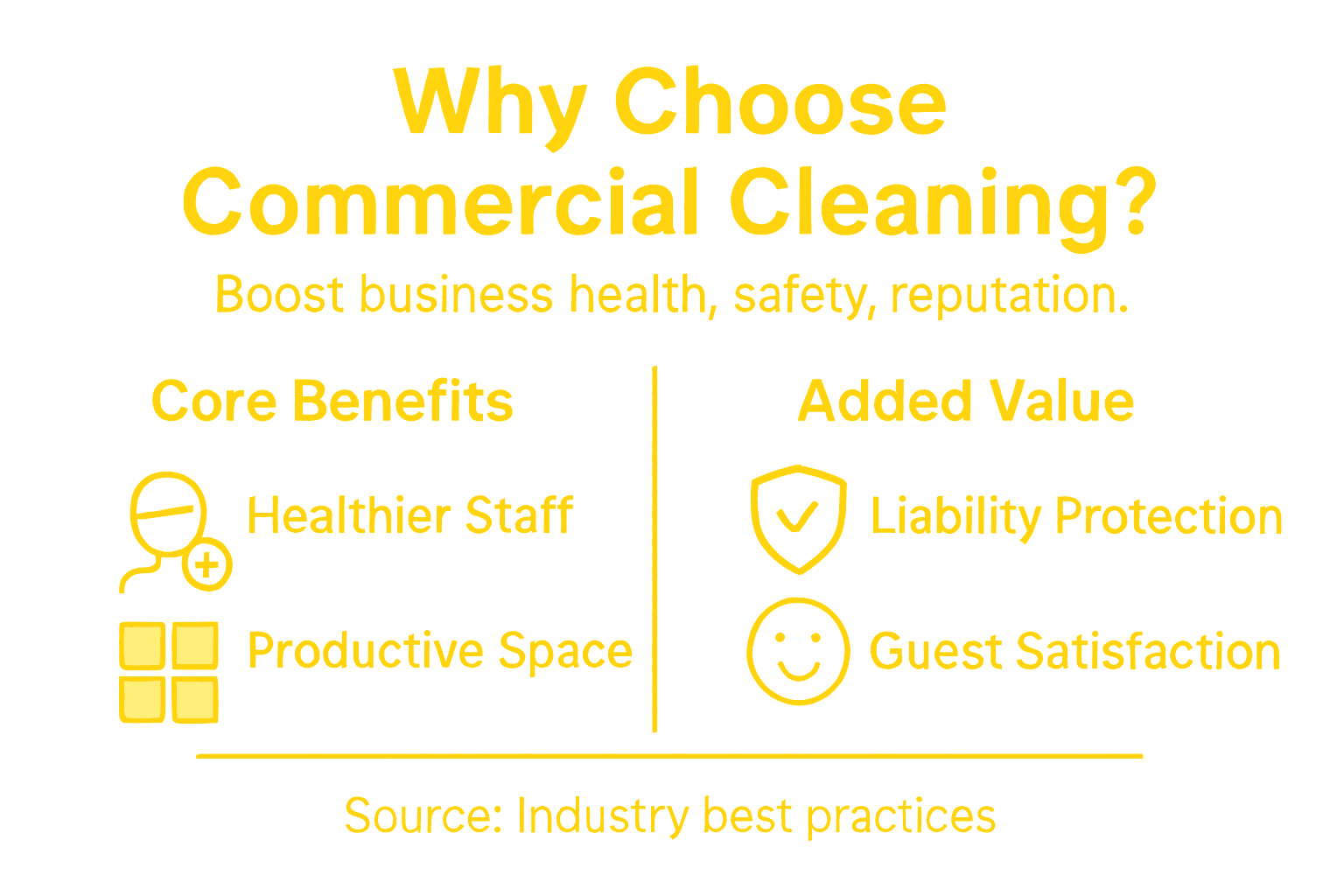
A clean office isn’t just about appearances. When your workspace is properly maintained, employees show up healthier, stay more focused, and actually get more done. The connection between cleanliness and business performance is real and measurable.
Dirt, dust, and contamination accumulate daily in commercial spaces. Without professional cleaning, these invisible threats pile up—affecting air quality, spreading germs, and creating an environment where illness thrives.
How Clean Spaces Boost Employee Health
Employees spend eight or more hours daily in your office. They breathe the air, touch surfaces, and use shared facilities. A contaminated workspace becomes a breeding ground for colds, flu, and other illnesses that drain productivity.
Professional commercial cleaning targets what causes workplace illness:
High-touch surfaces like door handles, light switches, and keyboards get regularly disinfected
Restroom sanitation prevents the spread of bacteria and viruses
Air quality improvement through HVAC cleaning reduces dust and allergens
Carpet deep cleaning removes trapped pathogens that regular vacuuming misses
Kitchen and break room sanitization prevents foodborne illness
When employees work in a hygienic environment, they take fewer sick days and stay healthier overall.
Workplace safety improvements reduce work-related accidents and illnesses while increasing employee wellbeing and productivity.
The Productivity Connection
Here’s what might surprise you: clean spaces directly affect how much work gets done. Employees in tidy, sanitized environments report higher focus and better morale.
When your team isn’t worrying about germs or struggling with allergy symptoms, they concentrate better. Less absenteeism means consistent staffing. Lower illness rates mean fewer disruptions to projects and deadlines.
Professional office cleaning maintains hygiene standards that support employee health and workplace productivity, creating an environment where people perform at their best.
Safety and Liability Protection
Commercial cleaning isn’t optional in many industries. Restaurants, medical offices, and daycare facilities must meet health department standards. Failing inspections can result in fines, closures, or lost licenses.
Regular professional cleaning protects you:
Health code compliance prevents violations and penalties
Liability reduction if employees or customers get sick
Insurance benefits from maintaining safety standards
Reputation protection by maintaining clean, professional spaces
Vacation rentals especially benefit from consistent cleaning—guest satisfaction directly impacts reviews and bookings.
Pro tip: Document your cleaning schedule and have your service provider send you completion reports; this creates a paper trail that proves compliance if a health inspector ever questions your maintenance practices.
Financial and Legal Impacts for Owners
Choosing professional commercial cleaning isn’t just a convenience—it’s a financial and legal decision that protects your business. Neglecting proper cleaning can expose you to costly lawsuits, regulatory fines, and reputation damage that takes years to recover from.
Business owners often underestimate the financial risks of inadequate cleaning. A single incident can result in penalties far exceeding what you’d spend on professional cleaning services.
Regulatory Compliance and Fines
Many industries operate under strict health codes. Restaurants must pass health inspections. Medical offices must follow OSHA standards. Vacation rentals must maintain guest safety standards. Failing these inspections carries real consequences.
Non-compliance can result in:
Health department fines ranging from hundreds to thousands of dollars per violation
Temporary closure orders that stop revenue while you remediate
License suspension or revocation ending your ability to operate
Recurring inspection costs if violations are found
Professional cleaning services maintain the standards required by law, protecting your operating license and avoiding costly shutdowns.
Legal risk management requires identifying compliance risks and implementing controls through proper maintenance and regulatory adherence.
Liability and Insurance Implications
When someone gets sick or injured in your facility due to unsanitary conditions, you become liable. An employee contracting a workplace illness or a customer slipping on neglected floors can lead to lawsuits that drain your finances.
Commercial general liability insurance protects businesses from financial losses due to bodily injury or property damage claims, but insurers often deny claims if you failed to maintain reasonable cleaning standards.
Your insurance provider may also increase premiums or drop coverage entirely if your facility fails inspections or has repeated incidents.
Hidden Costs of Poor Cleaning
Skipping professional cleaning creates expenses that compound over time. Carpets deteriorate faster. HVAC systems work harder and fail sooner. Surfaces get damaged by neglect.
Costs add up quickly:
Carpet replacement instead of periodic deep cleaning
HVAC repair or replacement due to dust and debris accumulation
Increased sick leave as employees miss work due to illness
Employee turnover from working in unclean environments
Customer loss from poor facility conditions affecting reputation
A professional cleaning budget prevents these larger capital expenses and keeps your facility functioning longer.
Guest Satisfaction and Revenue Impact
For vacation rental owners, cleanliness directly affects bookings and revenue. One negative review about a dirty space can suppress bookings for months.
Guests now expect immaculate turnover between stays. Professional cleaning ensures consistent quality, higher ratings, and repeat bookings that grow your revenue.
Pro tip: Before signing a cleaning contract, verify your service provider carries commercial liability insurance and request proof of insurance naming your business as an additional insured—this protects you if something goes wrong during their cleaning work.
Comparing Professional Versus DIY Cleaning
Many business owners consider handling cleaning in-house to save money. The reality is far different. DIY cleaning for commercial spaces falls short in ways that cost you significantly more than professional services would.
The gap between DIY and professional isn’t just about effort—it’s about training, equipment, chemicals, and consistency. Professional cleaners know what you don’t.
Here’s a quick comparison of professional vs. DIY commercial cleaning:
Aspect | Professional Cleaning | DIY Cleaning |
Training | Certified, trained teams | Untrained staff |
Equipment | Industrial-grade, specialized | Basic, household tools |
Consistency | Documented standards, reliable | Quality varies each time |
Compliance | Meets health codes, audits | Risk of violations |
Long-term Cost | Prevents major repairs, lawsuits | Higher total expenses |
Productivity Impact | Employees focus on their work | Lost productive staff time |
The Equipment and Chemical Difference
Professional cleaners use industrial-grade equipment and EPA-approved disinfectants designed for commercial spaces. Your employees likely have a mop, bucket, and store-bought surface spray.
This difference matters:
HEPA-filter vacuums capture microscopic particles that regular vacuums miss
Commercial disinfectants kill pathogens that household cleaners cannot
Pressure washers clean external surfaces without damaging them
Carpet extraction machines remove deep-set dirt and allergens
Floor buffers and burnishers restore shine and extend carpet life
Your employees spending two hours cleaning with inadequate tools cannot match what professionals accomplish in the same timeframe.
Professional commercial cleaning follows validated procedures and risk assessments that ensure optimal hygiene standards, whereas DIY cleaning typically lacks this precision and consistency.
Training and Expertise
Professional cleaners receive training on proper chemical mixing, safety protocols, and cleaning procedures. They understand cross-contamination risks and know how to handle different surfaces without damage.
Your office manager or facilities person lacks this training. They might use the wrong cleaner on marble floors, damaging expensive surfaces. They might mix chemicals incorrectly, creating toxic fumes. They might miss critical contamination points entirely.
Professional cleaners bring specialized knowledge that protects your business from costly mistakes and health risks, ensuring compliance with industry standards and regulations.
Time and Productivity Costs
Assigning cleaning to employees distracts them from their actual jobs. An office manager spending three hours weekly on cleaning isn’t handling management tasks or attending to clients.
Calculate the real cost:
Employee hourly rate multiplied by cleaning hours weekly
Lost productivity on their actual job responsibilities
Overtime pay if cleaning pushes them into extra hours
Equipment investment for industrial cleaning tools
Chemical supply costs that accumulate over time
Most business owners discover that professional cleaning costs less than what they lose in employee productivity.
Consistency and Compliance Gaps
DIY cleaning depends on whoever’s available that week. One person cleans thoroughly; another rushes through. Standards fluctuate. This inconsistency fails health inspections and creates liability.
Professional services maintain consistent standards documented in completion reports. If an inspector arrives tomorrow, you have proof that proper cleaning occurred.
Pro tip: Calculate your actual DIY cleaning cost by multiplying employee hourly wages by weekly cleaning hours, then add equipment and supply expenses—you’ll likely find that professional cleaning saves money while delivering better results.
Experience the Professional Difference in Commercial Cleaning
The article highlights the challenges businesses face with maintaining clean, safe, and healthy spaces, especially when managing high-traffic offices, vacation rentals, or specialized environments. You need a cleaning partner who understands these pain points—such as deep cleaning, compliance with health standards, and consistent disinfection of high-touch surfaces—to protect your employees, guests, and reputation. Ignoring these needs risks employee health, legal liabilities, and loss of productivity.
At My Lemon Maids, we specialize in tailored commercial cleaning solutions that bridge the gap between standard maintenance and deep cleaning demands. Whether you require thorough office cleaning, reliable Airbnb turnover services, or expert post construction cleaning, our trained professionals use industrial-grade equipment and EPA-approved products that meet health and safety guidelines.
Ready to protect your business and boost employee wellbeing with expert cleaning you can trust Visit My Lemon Maids today to schedule your personalized commercial cleaning plan and experience the peace of mind that comes with a truly professional service Find out how our detailed approach to cleaning can keep your workspace healthier and more productive—don’t wait until small problems become costly setbacks.
Frequently Asked Questions
What is commercial cleaning?
Commercial cleaning is the systematic cleaning of business environments such as offices, retail spaces, and medical facilities using professional-grade equipment and trained teams to maintain hygiene and safety.
How often should businesses schedule commercial cleaning services?
Most businesses opt for general cleaning on a weekly or bi-weekly basis, while deep cleaning is typically performed quarterly or annually to address hidden dirt and allergens.
What are the benefits of hiring professional commercial cleaners?
Hiring professional commercial cleaners improves employee health and productivity, ensures compliance with health codes, reduces liability risks, and maintains a clean, professional appearance for your business.
How does deep cleaning differ from standard cleaning?
Deep cleaning focuses on areas that are often overlooked, such as behind furniture and inside HVAC systems, and is done less frequently than standard cleaning, which handles visible dirt and regular maintenance tasks.
Recommended
Comments