Role of Office Cleaning: Boosting Health and Productivity
- jeffwashausen
- Jan 30
- 7 min read


A busy workday in St. Augustine, Ponte Vedra, or Nocatee can quickly turn stressful when office surfaces and shared spaces lose their shine. Cleanliness at work is more than just about appearances. For office managers and business owners, establishing comprehensive cleaning practices is a smart way to reduce pathogen transmission and build a healthier environment. This guide breaks down office cleaning essentials and helps you select solutions that match your business needs and enhance staff productivity.
Table of Contents
Key Takeaways
Point | Details |
Importance of Office Cleaning | Office cleaning is essential for maintaining hygiene, preventing disease transmission, and enhancing employee productivity. |
Types of Cleaning Services | Various office cleaning services, including routine maintenance and deep cleaning, cater to specific organizational needs and health standards. |
Health and Productivity Impact | A clean workplace significantly boosts employee cognitive function and physical health, leading to better morale and reduced absenteeism. |
Professional vs. In-House Cleaning | Professional cleaning services offer specialized expertise, consistency, and advanced equipment, making them a more effective long-term solution than in-house cleaning. |
Defining Office Cleaning and Its Purpose
Office cleaning is a systematic process designed to maintain workplace hygiene, health, and productivity through strategic sanitization and organization. Far more than a simple aesthetic task, it represents a critical intervention for preventing disease transmission and creating optimal working environments. The primary goal is to reduce microbial contamination and create spaces that support employee wellness and professional performance.
According to the CDC environmental cleaning guidelines, effective office cleaning serves multiple crucial functions:
Removing surface contaminants
Reducing pathogen transmission
Preventing cross-contamination
Supporting employee health and safety
Maintaining professional workspace standards
The purpose of office cleaning extends beyond superficial tidiness. Comprehensive cleaning practices involve targeted interventions on high-touch surfaces, common areas, and frequently used equipment. This approach helps minimize potential health risks and creates an environment conducive to employee well-being and organizational productivity.
Effective office cleaning is not a luxury, but a fundamental requirement for maintaining workplace health and operational efficiency.
Professional office cleaning typically involves a structured approach that includes routine tasks such as dusting, vacuuming, disinfecting surfaces, organizing workspaces, and managing waste disposal. The University of South Carolina’s cleaning procedures emphasize using EPA-approved disinfectants and following systematic cleaning protocols to ensure thorough sanitization.
Pro tip: Implement a consistent cleaning schedule that addresses both visible dirt and invisible microbial threats to maintain a truly healthy workplace environment.
Types of Office Cleaning Services Explained
Office cleaning services encompass a diverse range of specialized solutions designed to maintain workplace hygiene and functionality. Cleaning service frameworks categorize these services into several distinct types, each addressing specific organizational needs and cleaning requirements.
Primary Categories of Office Cleaning Services include:
General Cleaning Services
Daily surface cleaning
Dusting and vacuuming
Trash removal
Basic sanitization
Specialized Deep Cleaning Services
Window and exterior cleaning
Kitchen and breakroom deep cleaning
High-touch surface disinfection
Carpet and upholstery cleaning
Biohazard and infection control cleaning
The University of South Carolina’s cleaning procedures emphasize the importance of distinguishing between routine maintenance and comprehensive deep cleaning efforts. These services are strategically designed to address different levels of workplace sanitization, from daily upkeep to periodic intensive cleaning.
Not all cleaning services are created equal - the right approach depends on your specific workplace requirements and health standards.
Professional office cleaning services typically offer flexible scheduling options, including daily, weekly, and monthly service packages. These can be customized to suit various office sizes, industries, and specific hygiene requirements. Advanced services may also include specialized treatments for sensitive environments like medical offices, technology companies, or food service establishments.
Here’s how routine and deep office cleaning differ in scope and impact:
Aspect | Routine Cleaning | Deep Cleaning |
Frequency | Daily or weekly | Monthly or quarterly |
Target Areas | Desks, floors, trash | Carpets, vents, upholstery |
Disinfection Level | Basic surface | Complete microbial removal |
Health Benefit | Reduces germs | Eliminates hidden risks |
Business Advantage | Maintains appearance | Prolongs asset lifespan |
Pro tip: Always request a comprehensive cleaning service assessment to identify your office’s unique sanitization needs and develop a targeted cleaning strategy.
Essential Office Cleaning Processes and Standards
Office cleaning requires a systematic and scientifically-backed approach to ensure comprehensive workplace sanitization. CDC cleaning program guidelines outline critical processes that transform cleaning from a basic task to a strategic health intervention.
Key Cleaning Process Components:
Preparation
Assess cleaning requirements
Select appropriate cleaning agents
Gather necessary personal protective equipment (PPE)
Cleaning Execution
Follow systematic cleaning sequences
Use EPA-approved disinfectants
Implement proper technique for different surfaces
Avoid cross-contamination
The University of South Carolina’s cleaning procedures emphasize the importance of methodical cleaning standards that go beyond surface-level sanitization. Effective cleaning involves understanding surface materials, selecting appropriate cleaning agents, and following precise disinfection protocols.
Successful office cleaning is not about speed, but about systematic and thorough sanitization techniques.
Professional cleaning processes typically include detailed checklists and quality control mechanisms. These standards ensure consistent cleaning performance, addressing high-touch areas, managing waste, and maintaining a hygienic workspace that supports employee health and productivity.
Pro tip: Develop a standardized cleaning checklist with specific protocols for different office areas to ensure comprehensive and consistent sanitization.
Impacts on Employee Health and Workplace Productivity
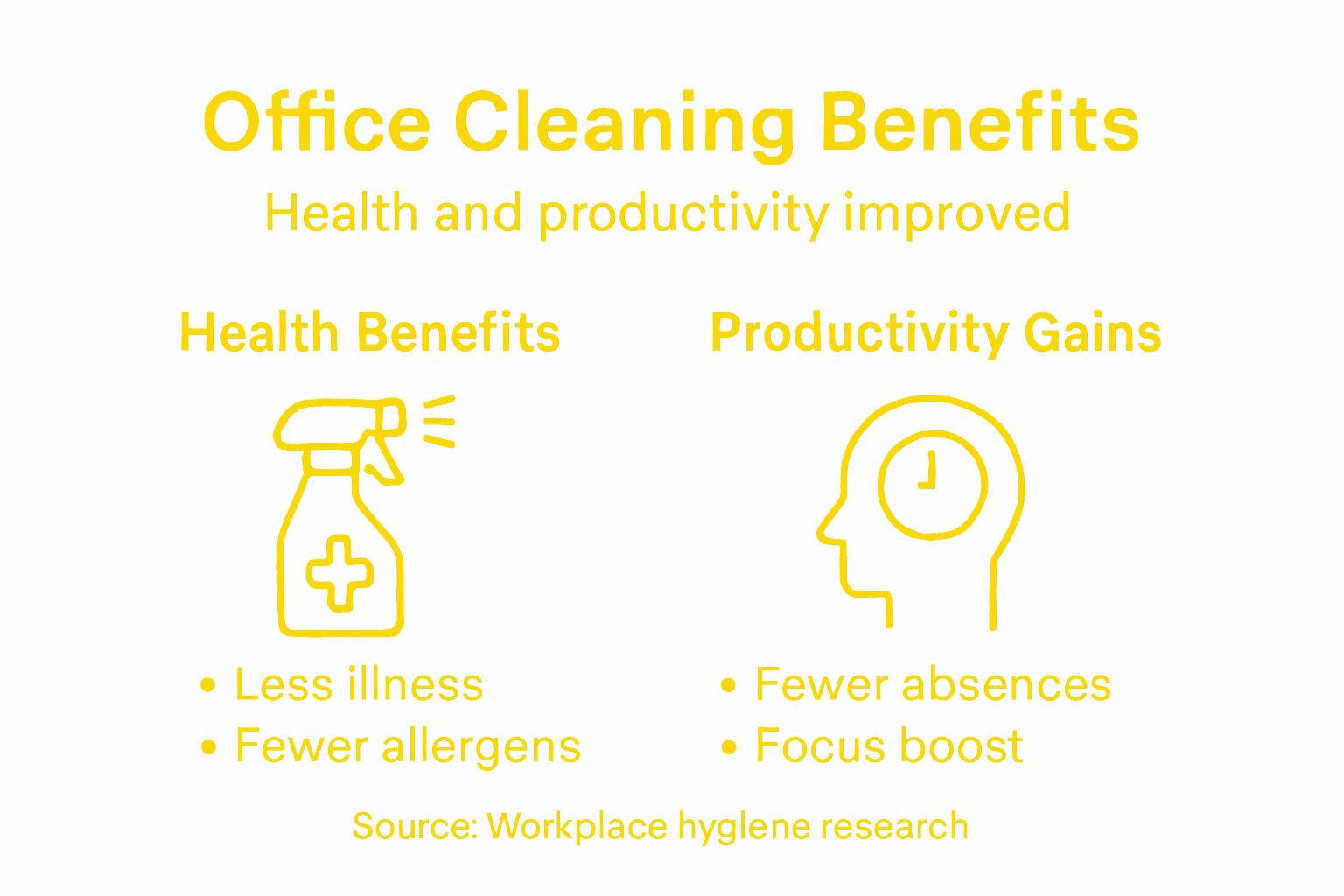
Workplace cleanliness directly correlates with employee health and organizational performance. Indoor air quality research demonstrates that clean environments significantly impact cognitive function and workplace efficiency.
Key Health and Productivity Impacts:
Cognitive Function
Improved mental clarity
Enhanced decision-making skills
Reduced cognitive fatigue
Physical Health Benefits
Lower disease transmission rates
Decreased respiratory issues
Reduced allergen exposure
Minimized sick day occurrences
The Johns Hopkins Institute for Health & Productivity Studies provides compelling evidence linking workplace cleanliness to substantial productivity gains. Clean environments reduce stress, minimize distractions, and create psychological conditions that support peak employee performance.
A clean workplace is not a luxury, but a critical investment in human capital and organizational success.
Research indicates that organizations investing in comprehensive cleaning protocols can experience significant returns through reduced absenteeism, improved employee morale, and enhanced overall workplace efficiency. The psychological impact of a clean environment cannot be overstated - it signals organizational care and professionalism, which directly influences employee engagement and productivity.
Pro tip: Conduct quarterly workplace cleanliness assessments to continuously monitor and improve your office environment’s health and productivity standards.
Professional Cleaning vs. In-House Solutions
Choosing between professional cleaning services and in-house cleaning solutions represents a critical strategic decision for organizations seeking optimal workplace hygiene. Cleaning industry standards reveal significant differences in approach, expertise, and overall effectiveness between these two cleaning methodologies.
Comparative Evaluation of Cleaning Approaches:
Professional Cleaning Advantages
Specialized training
Advanced equipment
Comprehensive sanitization protocols
Consistent quality standards
Reduced organizational liability
In-House Cleaning Limitations
Limited professional training
Basic cleaning equipment
Inconsistent performance
Higher training and management costs
Potential compliance gaps
The American Cleaning Institute highlights that professional cleaning services provide more than surface-level maintenance. They bring scientific expertise, systematic approaches, and specialized knowledge that transform workplace cleaning from a routine task to a strategic health intervention.
Professional cleaning is an investment in workplace health, not merely an operational expense.
Cost considerations extend beyond immediate financial implications. Professional services often prove more economical long-term by reducing employee sick days, minimizing equipment damage, and maintaining higher environmental standards. While in-house solutions might seem cost-effective initially, they frequently lack the comprehensive approach needed for truly effective workplace sanitization.
Below is a comparison of professional vs. in-house cleaning approaches:
Criteria | Professional Service | In-House Staff |
Expertise | Specialized training | Basic knowledge |
Equipment | Industrial-grade tools | Consumer products |
Cost Over Time | Lower due to efficiency | Higher due to errors |
Compliance | Follows industry standards | May lack consistency |
Reliability | Scheduled and trackable | Dependent on staff availability |
Pro tip: Conduct a detailed cost-benefit analysis comparing professional and in-house cleaning, considering long-term health and productivity impacts, not just immediate expenses.
Elevate Your Office Health and Productivity with Expert Cleaning Solutions
Maintaining a truly clean office goes beyond surface tidiness. As highlighted in the article, effective office cleaning plays a vital role in reducing microbial contamination, preventing disease transmission, and boosting employee well-being and productivity. If your workplace struggles with managing consistent sanitation or fears hidden health risks, professional services can provide the strategic, comprehensive approach needed. At My Lemon Maids, we specialize in tailored office cleaning that addresses both routine and deep cleaning needs, ensuring your workspace supports optimal cognitive function and minimizes absenteeism.

Discover the difference of a professionally cleaned office designed to enhance employee health and operational efficiency. Don’t wait for hidden risks to impact your team’s performance. Act now and explore our office cleaning solutions to schedule a personalized consultation. Take the first step toward a healthier, more productive workplace with My Lemon Maids.
Frequently Asked Questions
What is the main purpose of office cleaning?
Office cleaning is designed to maintain hygiene, health, and productivity in the workplace by reducing microbial contamination and creating a conducive environment for employee wellness and performance.
What are the key benefits of a clean office environment?
A clean office contributes to improved employee health, reduced disease transmission, enhanced cognitive function, and increased overall productivity by minimizing distractions and stress.
How often should office cleaning be performed?
Routine cleaning should be conducted daily or weekly, while deep cleaning should occur monthly or quarterly to ensure comprehensive sanitization and address higher-risk areas.
What are the differences between professional cleaning services and in-house cleaning solutions?
Professional cleaning services offer specialized training, advanced equipment, and systematic sanitization protocols, while in-house cleaning may lack expertise and consistency, and can lead to higher long-term costs due to reduced effectiveness.
Recommended
Comments