Office cleaning duties list: Streamline workspace maintenance
- Glenn Brosnick
- Mar 29
- 7 min read
Most office managers assume that cleaning just means wiping surfaces and emptying trash. The reality is that sequence, tools, and frequency are what separate a truly clean workspace from one that looks clean but harbors germs. Studies show that dirty workplaces reduce productivity by spreading illness and lowering morale. If you manage an office in St. Augustine, Ponte Vedra, or Nocatee, having a structured office cleaning duties list is one of the most practical steps you can take to protect your team and your business. This guide gives you the full picture, from daily tasks to deep cleaning schedules, so you can stop guessing and start maintaining.
Table of Contents
Key Takeaways
Point | Details |
Cleaning boosts productivity | A detailed cleaning duties list directly improves employee health and performance. |
Task frequency matters | Scheduling duties by daily, weekly, and monthly intervals ensures comprehensive maintenance. |
Proper tools prevent contamination | Using microfiber cloths, EPA-registered disinfectants, and HEPA vacuums minimizes office health risks. |
Focus on touchpoints | Sanitizing high-touch surfaces is key for preventing germ spread and maintaining a safe workspace. |
Training drives consistency | Staff education and regular quality checks help keep your office cleaning list effective. |
Why a comprehensive cleaning duties list matters
A cleaning duties list is not just a checklist. It is a system that protects your employees, reduces liability, and keeps your workspace running efficiently. Research consistently links cleaning’s impact on productivity to fewer sick days and better focus. When people work in a clean environment, they perform better. That is not an opinion. It is a measurable outcome.
Without a structured list, tasks get skipped. One person assumes another handled the restroom. Nobody remembers when the breakroom microwave was last wiped down. These gaps create cross-contamination risks, especially in shared spaces.
A well-designed duties list also helps with boosting office satisfaction among employees. People notice when their workspace is cared for. It signals that management takes their health seriously.
Here is what a solid cleaning duties list accomplishes:
Eliminates confusion about who is responsible for each task
Ensures high-risk areas like restrooms and kitchens are cleaned at the right frequency
Reduces the chance of cross-contamination between zones
Creates accountability for cleaning staff or vendors
Supports compliance with health and safety standards
“A structured cleaning program with defined sequences, correct tools, and set frequencies is the foundation of a healthy, productive workplace.” ISSA Power Clean Standards
Office cleaning duties: Core tasks and frequencies
With the case clear, here is the practical rundown of essential cleaning responsibilities. The key is organizing tasks by frequency and following a high-to-low, least-to-most-soiled sequence. You always clean from top to bottom so dust and debris fall to the floor before you vacuum or mop.
We recommend using color-coded microfiber cloths and EPA-registered disinfectants for all surface work. HEPA vacuums are the industry standard for capturing fine particles without redistributing them into the air. These tools are not optional extras. They are what make cleaning effective rather than just cosmetic.
Here is a breakdown of core tasks by frequency:
Task | Frequency | Method |
Empty trash and replace liners | Daily | All bins, including recycling |
Disinfect desks and workstations | Daily | EPA-registered disinfectant, microfiber cloth |
Wipe door handles and light switches | Daily | Color-coded cloth, disinfectant spray |
Vacuum carpets and rugs | Daily or 3x weekly | HEPA vacuum |
Mop hard floors | Daily or 3x weekly | Microfiber mop, neutral cleaner |
Clean and sanitize restrooms | Daily | Full protocol, see Section 4 |
Wipe breakroom counters and appliances | Daily | Food-safe disinfectant |
Dust shelves, vents, and blinds | Weekly | Microfiber duster |
Clean interior windows and glass | Weekly | Streak-free glass cleaner |
Deep clean carpets | Monthly or quarterly | Hot water extraction |
Sanitize upholstered furniture | Monthly | Fabric-safe cleaner |
For your standard cleaning workflow, always start in the least-used areas and work toward the most-used zones. This prevents spreading contamination from high-traffic areas into cleaner spaces.
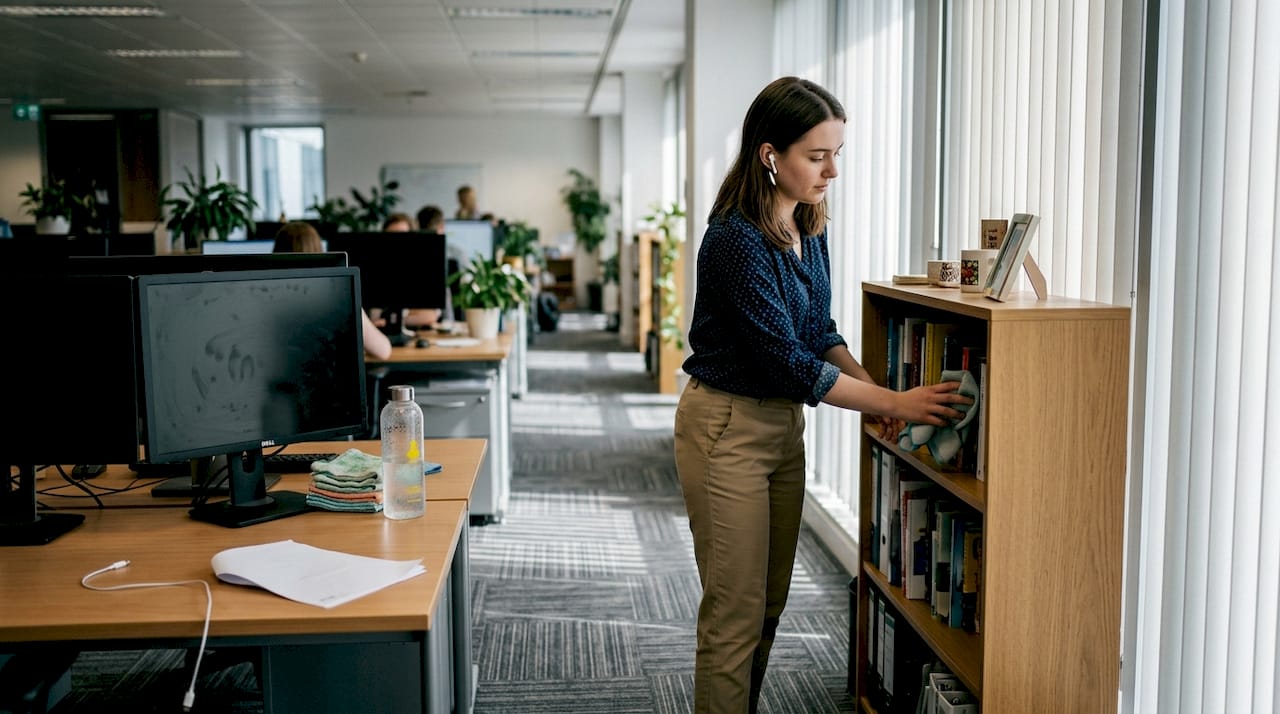
When it comes to sanitizing common touchpoints, do not just wipe. Apply the disinfectant, let it sit for the full dwell time listed on the label, then wipe. Skipping dwell time means the product does not have time to kill pathogens.
Here are the most commonly missed touchpoints in office cleaning:
Keyboard and mouse surfaces
Shared printer buttons and copier panels
Elevator buttons and stair railings
Refrigerator handles and microwave door handles
Coffee machine buttons and water dispenser levers
Pro Tip: Schedule entryway and restroom cleaning before lunch. These areas see peak traffic mid-day, and cleaning them before the rush keeps contamination levels lower during the busiest hours.
For a full step-by-step cleaning process, you can follow a room-by-room breakdown that covers every zone in your office.
Special attention areas: Touchpoints, windows, and restrooms
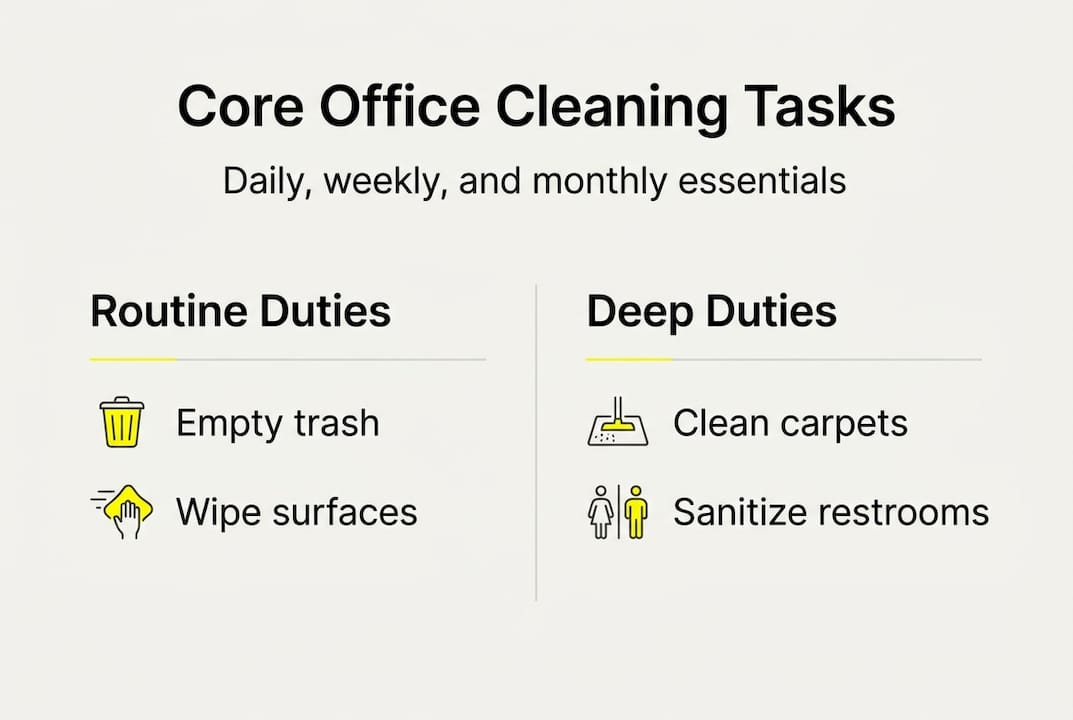
Now let’s dig deeper into the areas most likely to affect workspace health and appearance. Routine cleaning handles surface-level maintenance. Deep cleaning addresses what routine cleaning misses.
Here is a comparison of routine versus deep cleaning for the three most critical areas:
Area | Routine cleaning | Deep cleaning |
High-touch surfaces | Wipe with disinfectant daily | Disassemble and clean keyboards, phones, panels quarterly |
Windows | Wipe interior glass weekly | Clean frames, tracks, and exterior glass monthly or seasonally |
Restrooms | Full sanitize daily | Descale fixtures, grout scrubbing, exhaust fan cleaning monthly |
For cleaning office windows, frequency matters more than most managers realize. Clean windows improve natural light quality, which directly affects employee mood and energy. Dirty windows also create a poor first impression for clients visiting your St. Augustine or Ponte Vedra office.
Restroom sanitation requires a specific sequence to avoid cross-contamination. Follow these steps every time:
Put on gloves and gather all supplies before entering
Remove trash and replace liners
Apply toilet bowl cleaner inside the bowl and let it sit
Spray disinfectant on all surfaces: toilet exterior, sink, faucet handles, and countertops
Wipe all surfaces from cleanest to dirtiest (sink first, toilet last)
Scrub the toilet bowl and flush
Clean mirrors with streak-free glass cleaner
Mop the floor from the back of the room toward the door
Replace paper products and soap
Remove gloves and wash hands
For touchpoint sanitizing tips that go beyond the basics, focus on items people touch without thinking, like light switches, cabinet pulls, and shared equipment.
Pro Tip: Proper dwell time for disinfectants is non-negotiable. Most products require 30 seconds to 4 minutes of contact time to be effective. Apply, wait, then wipe. Rushing this step wastes product and leaves pathogens behind.
Implementing your cleaning duties list: Training and quality checks
To put your list into action, follow these implementation steps for consistency and results. A list on paper only works if the people using it understand what each task requires and why it matters.
Here is how to train cleaning staff effectively:
Walk through the office together and identify every zone that needs cleaning
Assign specific tasks to specific roles so there is no overlap or confusion
Demonstrate the correct technique for each task, including product application and dwell times
Explain the color-coding system for cloths so staff know which cloth goes where
Conduct a supervised cleaning session before staff work independently
Review the completed checklist after each session for the first two weeks
For optimizing office cleaning workflow, the goal is to build a routine that staff can follow without constant supervision. Consistency comes from clear expectations, not micromanagement.
Once training is complete, use these quality check points to evaluate results:
Visible cleanliness: no dust on surfaces, no streaks on glass, no debris on floors
Correct products used in each zone (check labels and color-coded supplies)
Trash bins emptied and relined in every room
Restrooms fully stocked with paper products and soap
No odors in restrooms, breakrooms, or trash areas
High-touch surfaces visibly clean and disinfected
For a full office cleaning process guide, you can reference a structured framework that covers every step from setup to final walkthrough.
“ISSA standards recommend structured procedures, defined frequencies, and proper tool use to achieve measurable outcomes in workplace cleanliness and safety.”
Adapt your duties list to your specific office layout. A medical office in Nocatee has different needs than a real estate firm in Ponte Vedra. Factor in foot traffic, the number of shared surfaces, and any industry-specific requirements when building your schedule.
Streamline your office cleaning with local professionals
Building and managing a cleaning duties list takes time, and executing it consistently takes even more. If your team is stretched thin or you want guaranteed results without the overhead, working with a professional cleaning service is a practical solution.
My Lemon Maids provides local office cleaning services across St. Augustine, Ponte Vedra, and Nocatee, with trained, insured staff who follow structured protocols every visit. We offer commercial cleaning options tailored to your office size and schedule, including recurring maintenance and deep cleaning. We also handle window cleaning services to keep your workspace looking sharp inside and out. Scheduling is straightforward, and you get consistent quality without having to manage the process yourself. Reach out today to get a quote and see how we can support your office maintenance goals.
Frequently asked questions
What is the most important task in the office cleaning duties list?
Sanitizing high-touch surfaces like desks, phones, and door handles is the top priority because these areas spread germs fastest. Targeting touchpoints consistently reduces cross-contamination and keeps your team healthier.
How often should professional cleaners deep clean an office?
Most offices benefit from deep cleaning every 3 to 6 months, depending on foot traffic and industry type. Cleaning frequencies and proper sequencing are key factors in maintaining a safe and efficient workspace.
What cleaning supplies are recommended for effective office maintenance?
We recommend color-coded microfiber cloths, EPA-registered disinfectants, and HEPA vacuums for all office cleaning tasks. These industry-standard tools ensure you are cleaning effectively, not just moving dirt around.
How do I ensure the cleaning duties list is followed consistently?
Clear training, written checklists, and routine quality checks are the most reliable way to maintain consistency. Structured procedures reduce missed tasks and keep both in-house staff and outside vendors accountable.
Recommended
Comments